Been thinkin’ a lot today
I’ve been thinkin’ a lot today.
About time travel. And perilous trips in RVs. And what the future might look like. That’s mostly due to my lingering euphoria from last weekend’s sold out screening of Nirvanna the Band the Show the Movie but as coincidence would have it, time travel and RVs and the future of the world are subjects that would reappear in the other two films I saw at the cinema most recently.
One is Arco, an animated film about a boy from a peaceful future who accidentally travels back to a world in peril and enlists the help of a young girl to return home. The other is Sirât, a hectic drama about a father’s hellish tightrope walk through Moroccan desert raves and threatening terrain as World War III kicks off in the background. Both are nominated for Academy Awards at this year’s upcoming ceremony.
What’s interesting is that the most innovative and emotionally resonant film of the three is the one about two friends whose only goal for the last 17 years has been to book a gig at the Rivoli.
So for this triple review, I’m starting on a high.
Nirvanna the Band the Show the Movie
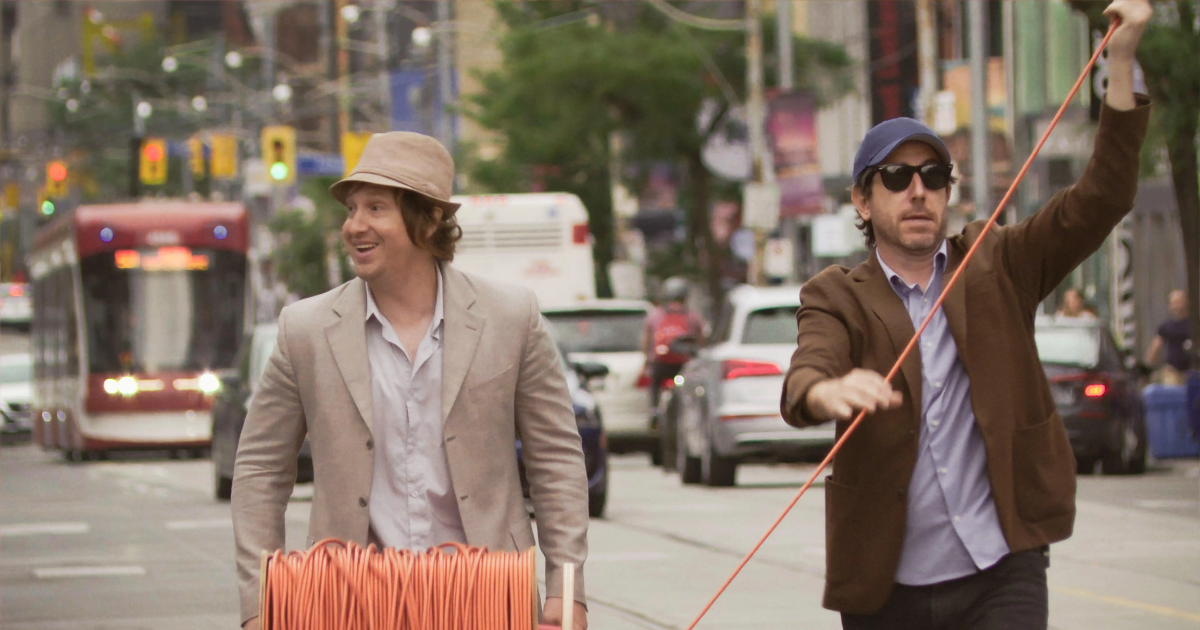
For the uninitiated, Nirvanna the Band the Show started as a mockumentary comedy web series in 2007 (then as Nirvana the Band or Nirvana the Band the Show). In 2017 Matt Johnson and Jay McCarrol added an ‘h’ and adapted it into a spiritual sequel series on Viceland. It ran for two seasons, with a third being half produced but never airing.
The 2017 show (along with extras like Update Day) was my entrypoint for the now-cult phenomenon that is NTBTS and it became one of several Canadian mainstays (the others being Nathan Fielder and Kenny vs. Spenny) in our household. Almost a decade later, upon hearing that Perth would actually be getting ‘the Movie’, Alex and I dusted off our figurative fedoras and were well and truly seated.
Like the web series and the show, NTBTSTM follows Matt and Jay as they try to book a show at the Rivoli. And after 17 years, their plan still does not involve simply recording a song, submitting it to the Rivoli and asking if they can perform. Instead, Matt proposes that they skydive off the CN Tower into the SkyDome as a publicity stunt to attract the Rivoli’s attention. The duo fails in spectacular and truly insane fashion, causing a rift between the pair (a common theme from the show is Jay planning to leave the band) and leading to a time travel plot that goes awry, sending the boys back to 2008.
While there they must limit exposure to 2008 Matt and Jay to avoid triggering the butterfly effect. But they also need to get their hands on some Orbitz (a discontinued Canadian drink that has little jelly beads in it) to fuel the RV and get back to 2025 – and the last known box is in their old web series apartment.
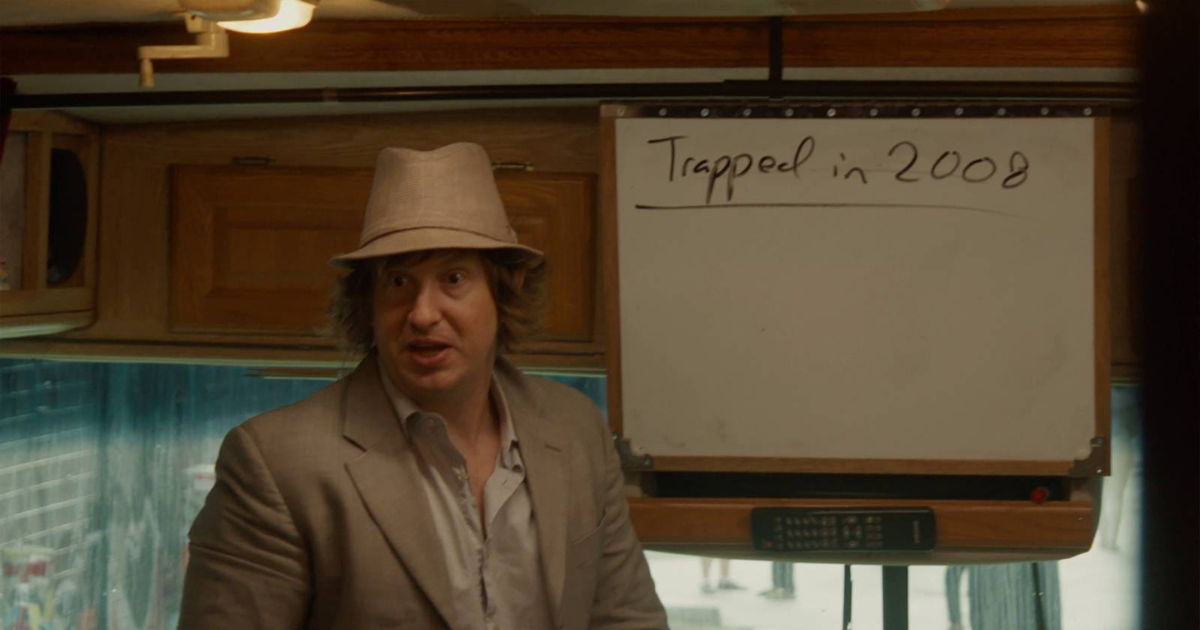
After a near miss with their former selves, Matt learns of Jay’s previous intentions of going solo and he does the unthinkable: he alters their 2008 whiteboard plan, a split second decision that sends the boys on different paths that have far reaching ramifications and will require a grand gesture to undo.
If you love Back to the Future, clever exploitation of fair use laws, the hilarity of hindsight and exploring the deep, meaningful ties that come from two decades of friendship, then you will likely enjoy NTBTSTM as much as I did.
Directed by Johnson, co-written by Johnson and McCarrol and shot by long-time cinematographer Jared Raab, this is cheeky, improvisational filmmaking at its finest. The plot is as airtight as it is exciting, it makes excellent use of footage from the original show and blends it seamlessly into the narrative, the jokes are top tier and it builds to an emotional climax that actually had me shedding a few tears (partly out of laughter and sheer awe).
I know it’s early but this is my current favourite film of the year. And considering that there was enough demand for Madman to deliver encore screenings across Australia, I’d say others are with me.
Verdict
☆☆☆☆☆
Arco
With my first time travel film of the year logged I entered Arco with my appetites whetted.
The animated sci-fi fantasy film is the feature length debut from director Ugo Bienvenu, a French illustrator who co-wrote and co-produced the film with Félix de Givry (alongside producers Sophie Mas and Natalie Portman).
I’d seen the trailer at previous media screenings and quotes like “A soulful time-travelling odyssey” and “Absolutely gorgeous shades of Miyazaki” were scrawled across its images, preparing me for a Studio Ghibli tier experience.
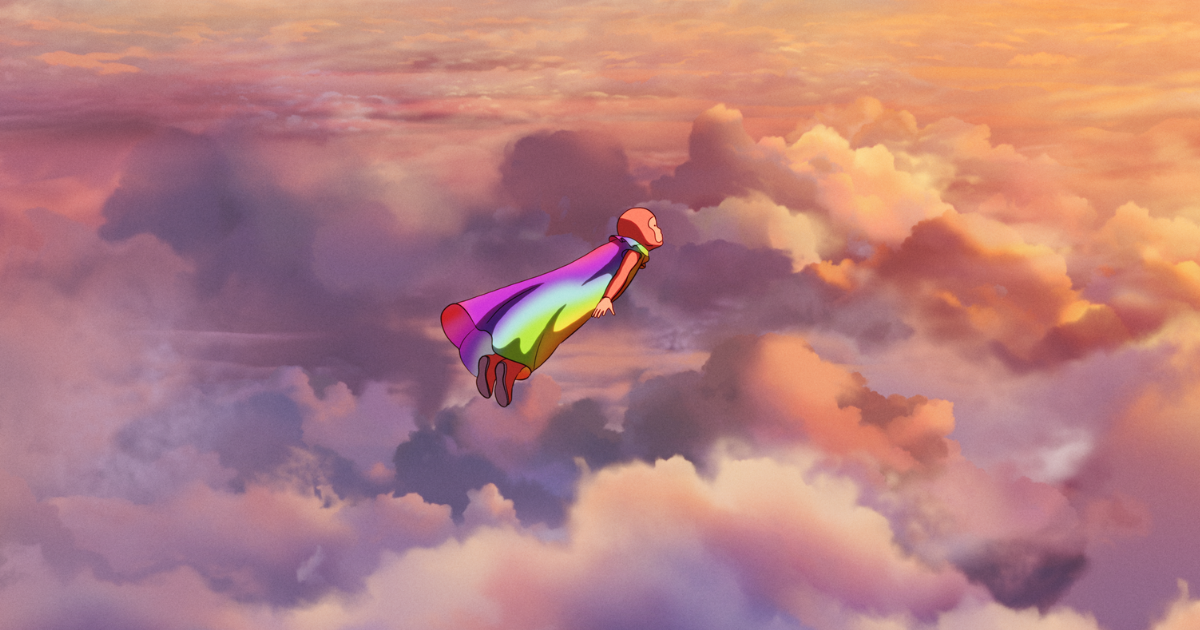
The film opens with the 10-year-old titular character in the year 2932, where humanity lives in idyllic domes atop futuristic treehouses in the clouds. They can also time travel by diving off of them and flying, so long as they’re wearing a technicolor dreamcoat and a diamond in their forehead – and so long as they’re of the minimum age for time travel, which is 12.
Arco is jealous of his sister and parents so while everyone is asleep in their hover beam beds (I don’t know how else to describe them), he steals his sister’s cape and diamond and yeets himself off the edge of their dome so he can go back to when dinosaurs walked the earth.
Unfortunately, he’s got no fucking idea what he’s doing and he ends up in 2075. As predicted by most scientists and economists, Earth is in a perpetual climate shitstorm. Children are raised by clankers as parents spend all their time at work (I guess the corporates succeeded in abolishing WFH) and are taught by them too, presumably because every generation coming up said “fuck that” to becoming teachers.
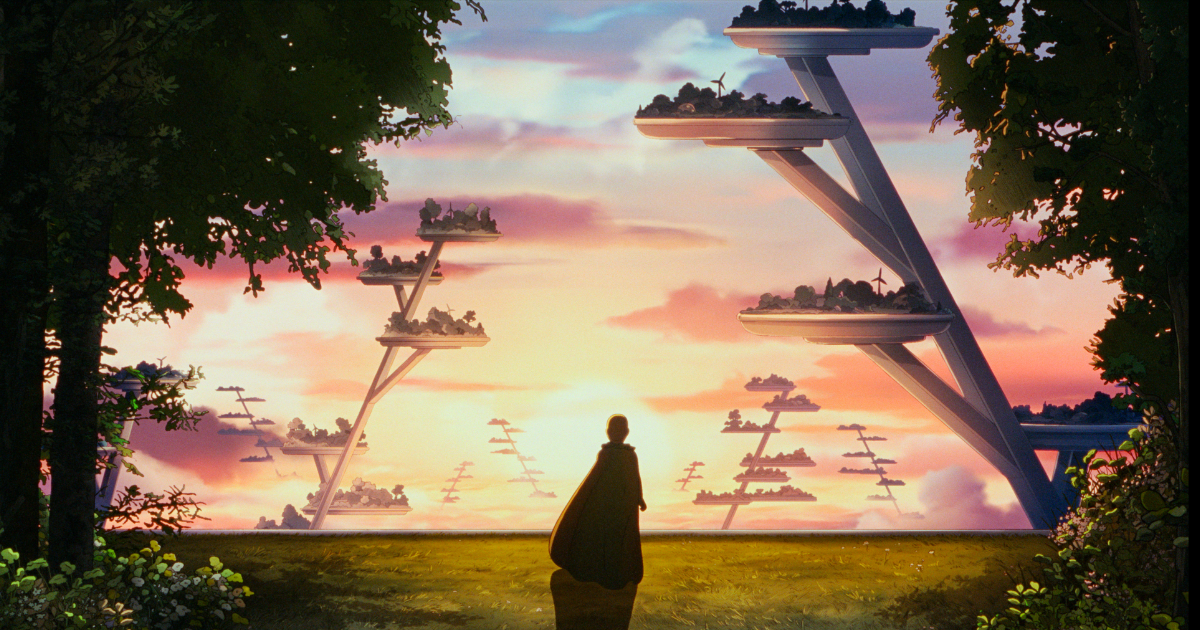
The crash landed Arco is discovered by 10-year-old Iris, a girl who’s been parentified by the system into co-raising her baby brother with her household clanker Mikki (voiced by Mark Ruffalo) and therefore finds her attention waning during class time. She sees a rainbow and follows it to find some treasure, but finds Arco instead. The pair then have to figure out how to get Arco home while evading a trio of conspiracy theorist brothers, the authorities and the wildfires that frequently rage through town.
It turns out that “shades of Miyazaki” is correct, because that’s all Arco manages to take from the legendary Ghibli animator and storyteller. It is beautifully illustrated and does have obvious echoes of Miyazaki’s works – Princess Mononoke’s environmentalism, Laputa: Castle in the Sky’s child with a crystal falling out of the sky, Spirited Away’s wholesome childhood love story – but lacks the charm and emotional resonance of his storytelling.
At only 88 minutes Arco is a tight feature and yet I found my mind wandering a bit and struggled to re-engage with the story. Worried that I’d missed some crucial plot point and this being the reason that the film’s climax didn’t affect me much, I went back and read the film’s Wikipedia plot, only to learn that I hadn’t missed anything at all. The beats are technically all there but they just didn’t hit for me, I guess.
I picked one last quote that I think illustrates why Arco feels lacking to me:
“It offers more hope and optimism than anything I’ve seen in a long time.”
It comes from Darren Aronofsky, whose recent work includes an AI YouTube series on the American revolution called On This Day... 1776. Nuff said.
Verdict
☆☆☆
Sirât
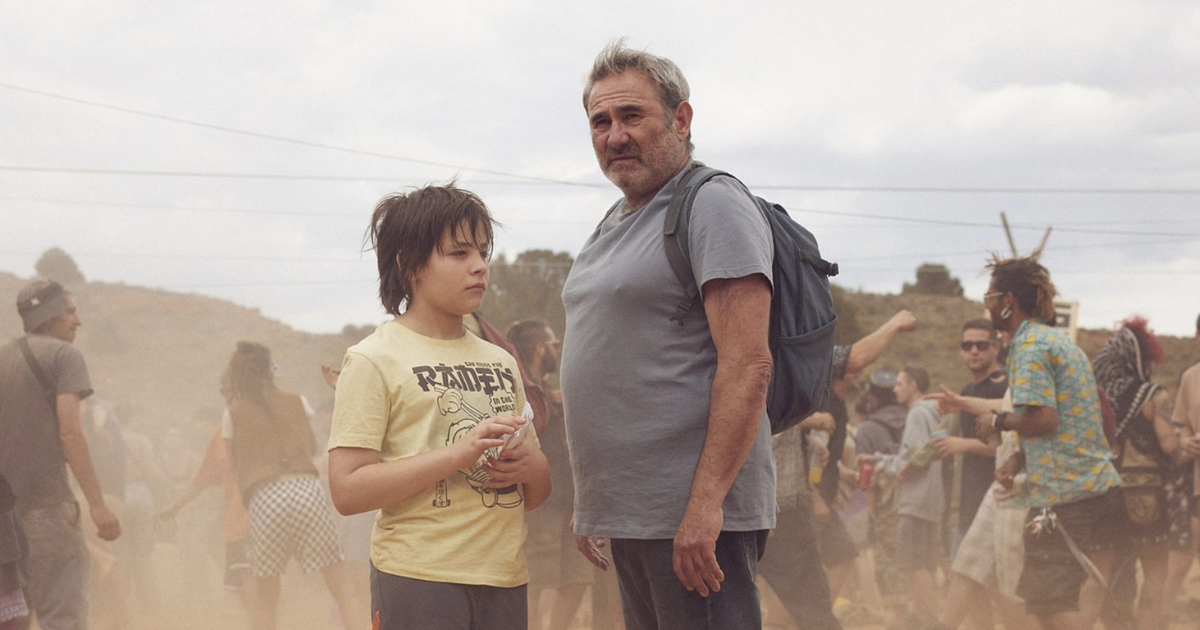
If this review started with one film’s ability to draw meaning from unexpected places, then it’s only right that it ends with one that delivers a visceral experience in place of any meaning at all.
That film is Oliver Laxe’s Sirât, the Jury Prize winner from last year’s Cannes Film Festival that one Letterboxed reviewer succinctly described as “Nomadland if it had been made by Gaspar Noè.” Nice one, Jannis.
Sirât comes from Islamic tradition and refers to the bridge – narrow as a hair and sharp as a sword – that connects Hell and Paradise. The film opens with this quote and ends after putting its audience (and characters) through a trial, though for what purpose I’m still not entirely sure.
We meet Luis (Pan’s Labyrinth villain Sergi Lopez) and his son Esteban, who have traveled by compact van to a desert rave in Morocco in search of their missing daughter/sister Mar. Whether Mar is actually missing or simply chose to get away for a bit is a mystery to us as she is an adult and we’re not really given any other details. The camera seems to linger on a woman in several of the rave scenes too, but maybe it’s my imagination.
Their failure to locate Mar coincides with the arrival of soldiers who stop the rave and order an evacuation, as conflicts between a few countries are sparking some sort of World War III event (considering recent events, I’m assuming Sirât takes place in the very, very near future). A snap decision sees Luis and Esteban follow a group of European ravers (some of whom have war wounds and missing limbs) to another rave that is supposedly happening deeper in the desert. Without saying more, shit pops off.
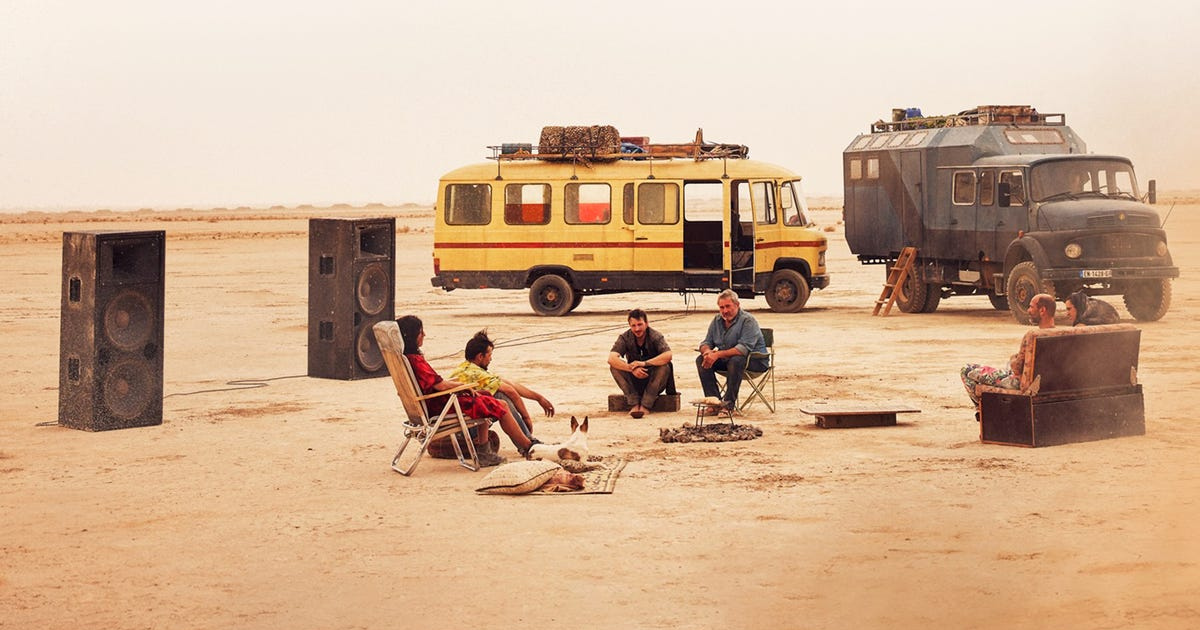
A different future, a different kind of recreational vehicle
For me, Sirât is Climax meets Sorcerer meets Mad Max and yet somehow miraculously still only feels like half a film. Apparently, Laxe’s initial idea was to make a film based on the simple concept of “trucks crossing the desert”. Unfortunately, that concept only works on its own if you’re George Miller.
My problems started around the halfway point of the film where something shocking and sudden happens. From that point on, I’m not sure the film really knows where to go and instead of exploring its characters’ psyches in response to this event, it just throws more obstacles their way, escalating to an explosive (wink) climax before ending shortly after without any resolution. I almost think the film should’ve been an hour longer, though I’m not sure there was enough in Laxe’s tank to allow this.
Like Arco, though, Sirât is quite breathtaking to look at and to listen to, which might explain the raves that it’s gotten from some critics. Shot in Morocco and Spain on super 16mm film, there’s a richness and tangibility to how the film looks that does a lot of the heavy lifting in setting up just how dire Luis’s odyssey is. Its score by David Letellier and sound design are infectious and no doubt where the Noè comparisons are coming from. I won’t forget it, but I also won’t necessarily rewatch it.
Verdict
☆☆☆