Alpha + The Ice Tower
ALPHA — Julia Ducournau
Some directors announce their entry into the film industry with a polite knock on the door. Others prefer to throw a couple of homemade bombs into the room, one containing generational cannibalism and coming of age drama inside and the other, fragments of vehicular impregnation and gender fluidity. French director Julia Ducournau very much falls into this second category.
With the critical success of 2016’s Raw and 2021’s Titane (the latter of which won the Palme d’Or, making Ducournau only the second woman in history to claim it), she quickly established herself as something of a body horror auteur. But she also set some pretty distinctive expectations from her fans (myself included) that would make veering from high concept body horror a risky move.
Five years after her last film Ducournau brings us Alpha, an AIDs allegory with decidedly less body horror and extremity (still a bit, though) and, surprisingly, a more confusingly told narrative. It’s her most personal film to date, she says, and yet the response has been mixed to negative for the most part (excepting the always fair Mark Kermode). I fall into the mixed category and remain a fan, albeit one whose hunger will grow more ravenous waiting another five years for her next. But I’m getting ahead of myself. Let’s talk about Alpha.
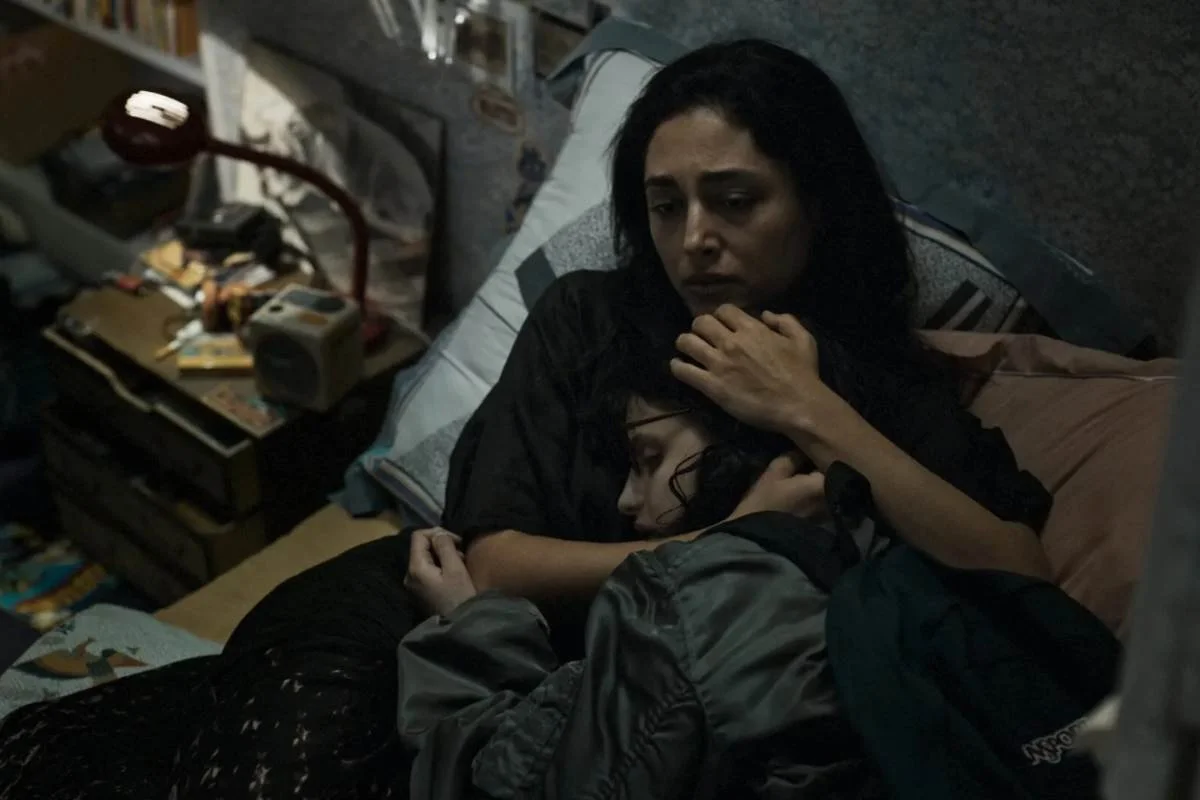
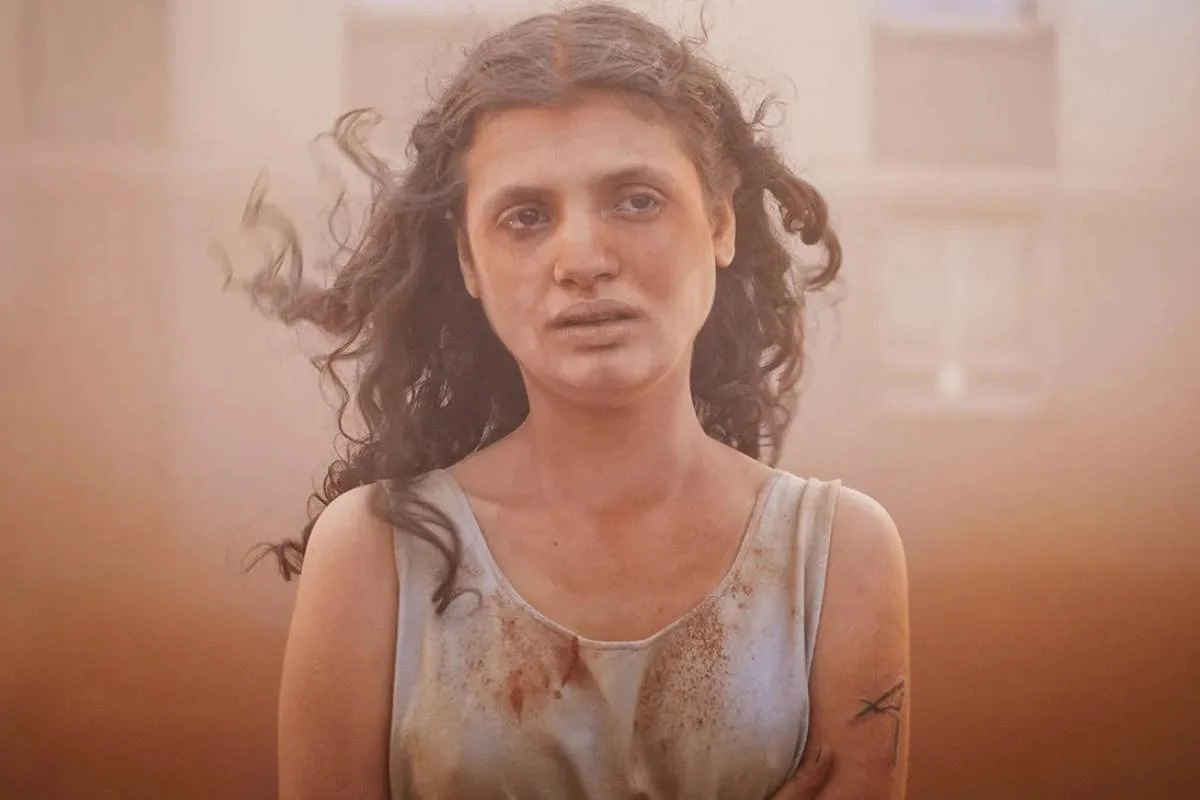
When 13-year-old Alpha (Mélissa Boros) comes home with a festy looking stick-and-poke tattoo on her arm (a somewhat unsubtle scarlet A), her doctor mother (Golshifteh Farahani) is understandably not stoked. But more than that, there’s panic in her voice and it’s not about the risk of hepatitis but instead, a strange bloodborne disease that has been raging for the past few years. It’s highly contagious and it seems to turn those infected to marble, slowly but surely killing them. It also seems to have impacted Alpha’s family before.
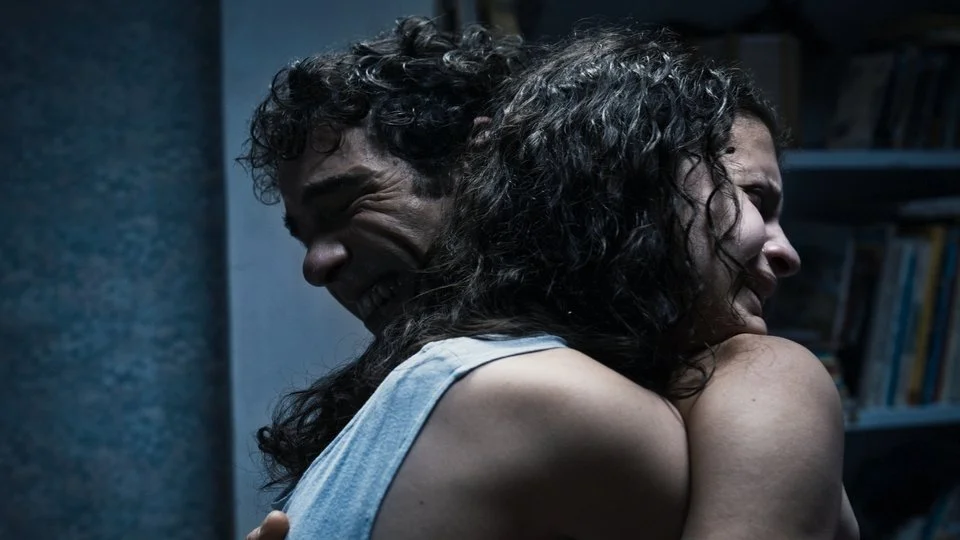
Coinciding with the mother/daughter plight is the arrival of Amin (Tahar Rahim), Alpha’s heroin-addicted uncle whom she hasn’t seen in eight years and who has come to stay with them at the request of her mother. Despite being overworked at the hospital Alpha’s mother takes care of both of them, helping Amin try to get off heroin and trying to calm Alpha’s nerves as she waits the required two weeks before testing for the disease.
The film flits between two timelines: one where Alpha is 13 (the 1990s) and being bullied by her school peers for potentially being infected and contagious, and one eight years prior where Alpha’s mother is treating Amin – and as many others as the hospital has beds for – for this new and quite devastating disease. Present day is coldly shot and graded, while the past is distinguishable by warmer, slightly nostalgic hues and Alpha’s mother’s fringe.
From what I can glean, this is a story about memory and childhood trauma from watching the AIDs epidemic unfold in the 80s and the shame and grief associated with it. There’s paranoia, superstition and people acting cruelly out of fear, but there’s also some intergenerational disconnect as Alpha doesn’t speak Berber (the language her extended family speak) and is not privy to half of the conversations her family have in front of her. Ducournau herself is of Berber descent, so I have to believe that this element was important, even if it feels like adding another layer of confusion to an already confusing setup.
Reading through the Wikipedia plot to get my bearings pretty much confirmed how convoluted Alpha’s narrative is and explains why I didn’t connect with this the way I did to Ducournau’s previous two films. There does seem to be intent and while I think I grasp the overall meaning, the result is that Alpha – which is a very bleak, upsetting and emotionally heavy film – doesn’t hit the way it perhaps should.
Despite this, I found the body horror elements (the calcification of the human body, its brittleness, the red dust that comes out in place of blood) quite fascinating and beautifully realised. The performances – particularly Golshifteh Farahani and Tahar Rahim – are strong and the scenes depicting Alpha being bullied are very effective at translating the feeling of paranoia and exclusion that I presume was rampant during the AIDs epidemic (I was not around to witness it).
Alpha is still an interesting, thought provoking film from a voice who clearly has a lot to say and the talent to say it. It’s not as coherent as it ought to be, which feels strange to say considering the subject matter and general explosiveness of Ducournau’s previous films. Then again, maybe it’s more important to make what you want than to make sense.
Verdict
☆☆☆
Alpha is screening from March 22 to April 14 as part of the Alliance Française French Film Festival.
THE ICE TOWER — Lucile Hadžihalilović
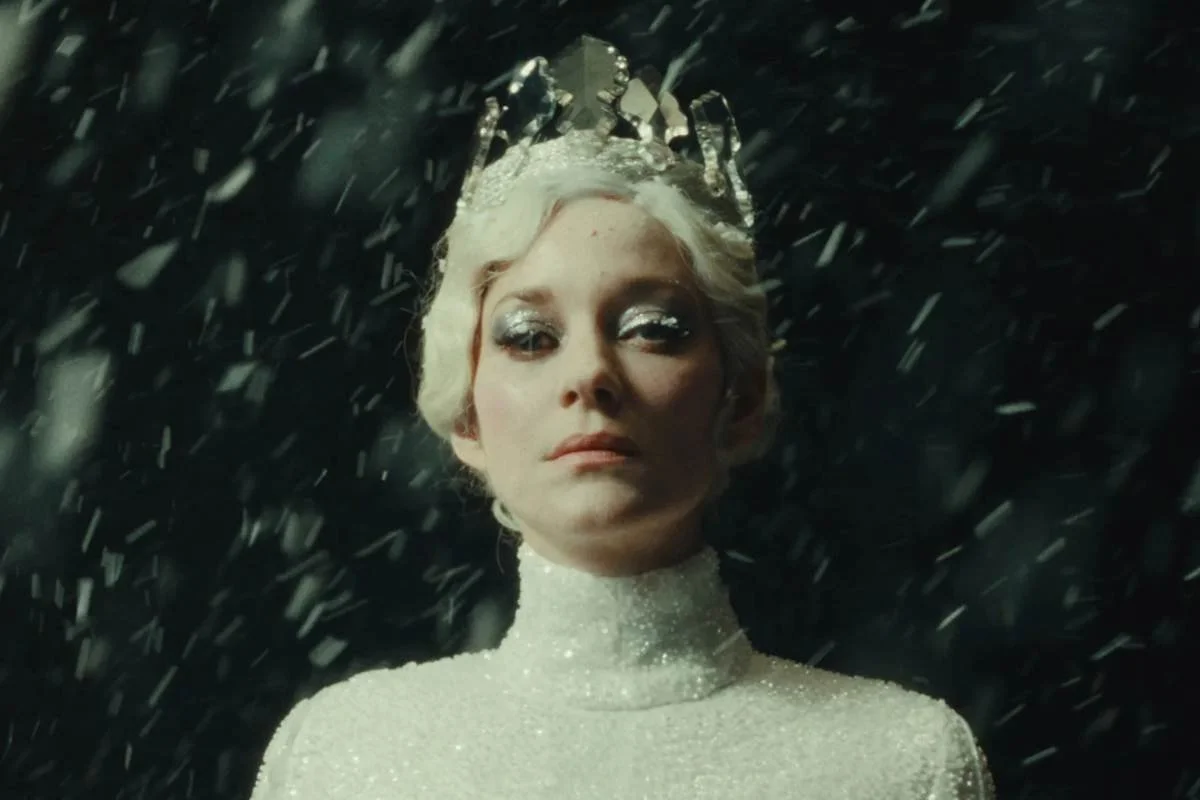
I tried to rewatch Frozen recently and was shocked to discover that it’s actually kinda lame and poorly animated. Maybe this realisation is due to the fact that I hadn’t had my eyes checked in 2013, or maybe it’s because I chucked the disc on after seeing The Ice Tower, a comparatively cool and mysterious take on Hans Christian Anderson’s The Snow Queen. It’s a creepy piece of metafiction that feels like if Peter Strickland directed a fairytale about mutually uncomfortable fascination and mummy issues – except it’s from French director Lucile Hadžihalilović and Marion Cotillard is Mummy.
It’s the 1970s and 15-year-old runaway Jeanne (Clara Pacini) hitchhikes from her foster home in the snowy mountains to the city. In search of somewhere to stay for the night and untrusting enough of random men not to ask their advice (good instincts, girl), she breaks into a seemingly abandoned building and settles in for the night. Upon waking, Jeanne realises that she’s actually set up camp in the studio where a film adaptation of The Snow Queen is being shot. It’s her favourite childhood story, so Jeanne takes the opportunity to ingratiate herself with the extras.
It’s here that she meets and forms an obsession with Cristina (Marion Cotillard), the beautiful but belligerent actress playing the Snow Queen in the film. Jeanne watches from the sidelines as Cristina acts an absolute menace on set, treating extras with cruelty and insisting on creative changes that frustrate the production crew. Through observation Jeanne learns how to get on Cristina’s good side and in return, Cristina starts to observe and favour Jeanne, using her influence to raise her up through the ranks of the extras. But as Jeanne’s desire grows, so too does her proximity to danger.
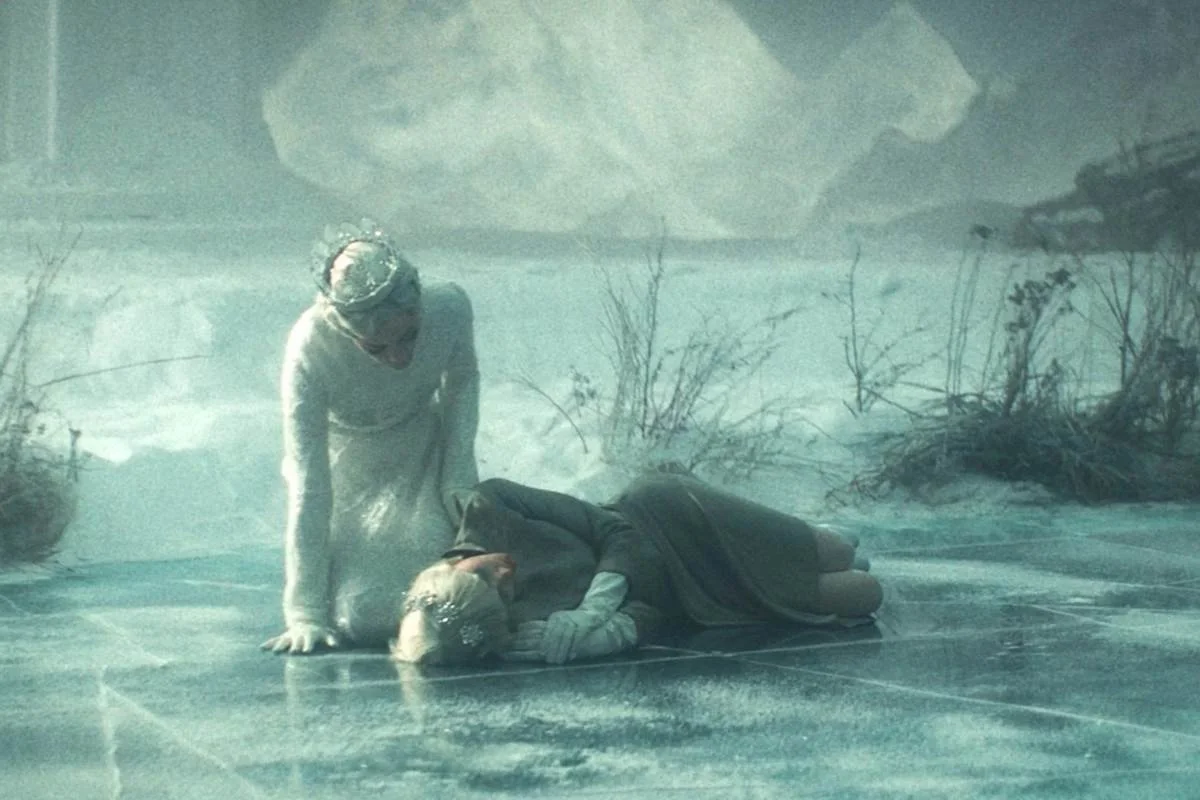
This is a slow, atmospheric film about the danger of getting too close to your heroines and searching for comfort in the wrong places. It reminded me of some of my favourite films that explore female dynamics and competition, like Suspiria (the Guadagnino one), The Favourite and even Lars Von Trier’s Nymphomaniac. It doesn’t have fantasy or supernatural elements beyond those created by the film within the film but it does have this sense of innocence and curiosity being corrupted as its protagonist pulls back curtains that she was never meant to see behind.
The cast is small and the only other notable characters are August Diehl as Cristina’s personal doctor/assistant and Gaspar Noé as the film’s director (he is Hadžihalilović’s husband and longtime collaborator), which heightens the intimacy but also the undercurrent of dread. It’s also quite beautiful to look at and there’s something tangible and grainy about its images, like if you reached out and touched them, you might find that they’re on paper instead.
Without spoiling the plot (minimal as it is), what I like most about The Ice Tower is how the theme of motherlessness works as a disadvantage to an ingénue in a fairytale. Jeanne has a good radar for danger that was instilled in her by her mother before she passed; she knows when to hop out of a car and when to leg it down a street after passing a couple of men having a chat in the shadows. But her radar for female danger is compromised by her desire for a mother figure. Like Coraline, the film teaches us that there’s a reason that role isn’t easily filled.
I had no expectations for The Ice Tower and only really requested a screener due to the Marion Cotillard of it all. But I was pleasantly surprised by its seductiveness and self-assuredness, and will now excuse myself to add all previous works from Lucile Hadžihalilović’s filmography to my watchlist.
Verdict
☆☆☆☆
The Ice Tower is screening from March 19 to April 10 as part of the Alliance Française French Film Festival.