The Craig Years
Some background
If Die Another Day accomplished one thing, it’s that it functioned as a central villain to unite all factions of production in doing the exact opposite for the next Bond film.
Unfortunately for Pierce Brosnan, it also functioned as the nail in his coffin. While Neal Purvis and Robert Wade wrote the next film’s script with him in mind, the fallout of Die Another Day combined with Brosnan’s salary request for the fifth film resulted in his unceremonious ousting. Broccoli was reportedly tearful on the phone after he asked if he still had the part, while Michael G. Wilson simply thanked him for his service. Ouch.
With a position to fill, a franchise to bring back from being a joke and Jason Bourne to compete with, the gang had some work to do.
Barbara Broccoli felt that the "frivolity" of much of the Brosnan era would not be appropriate for a post-9/11 Bond. Suddenly Cold War megalomaniacs with volcano lairs were not as scary as real world terrorists.
Eon felt they’d relied too heavily on CGI in previous films and wanted the stunts in the next film to be done “the old fashioned way.” Martin Campbell – hired to reboot the franchise for the second time – felt the script needed a rewrite and suggested Paul Haggis, whose thoughts were “let’s do for Bond what Batman Begins did for Batman". So where do you start? At the beginning.
Where the majority of the early Bond films drew from Ian Fleming’s novels, they often took little beyond the title and importantly, they rarely involved serialised storytelling. In adapting Fleming’s very first Bond novel, 1953’s Casino Royale, they’d have the freedom to disregard any continuity from the previous films, the opportunity to make a mark (since the only previous adaptation of the book was a non-Eon spoof) and the guardrails to ensure they stayed on track.
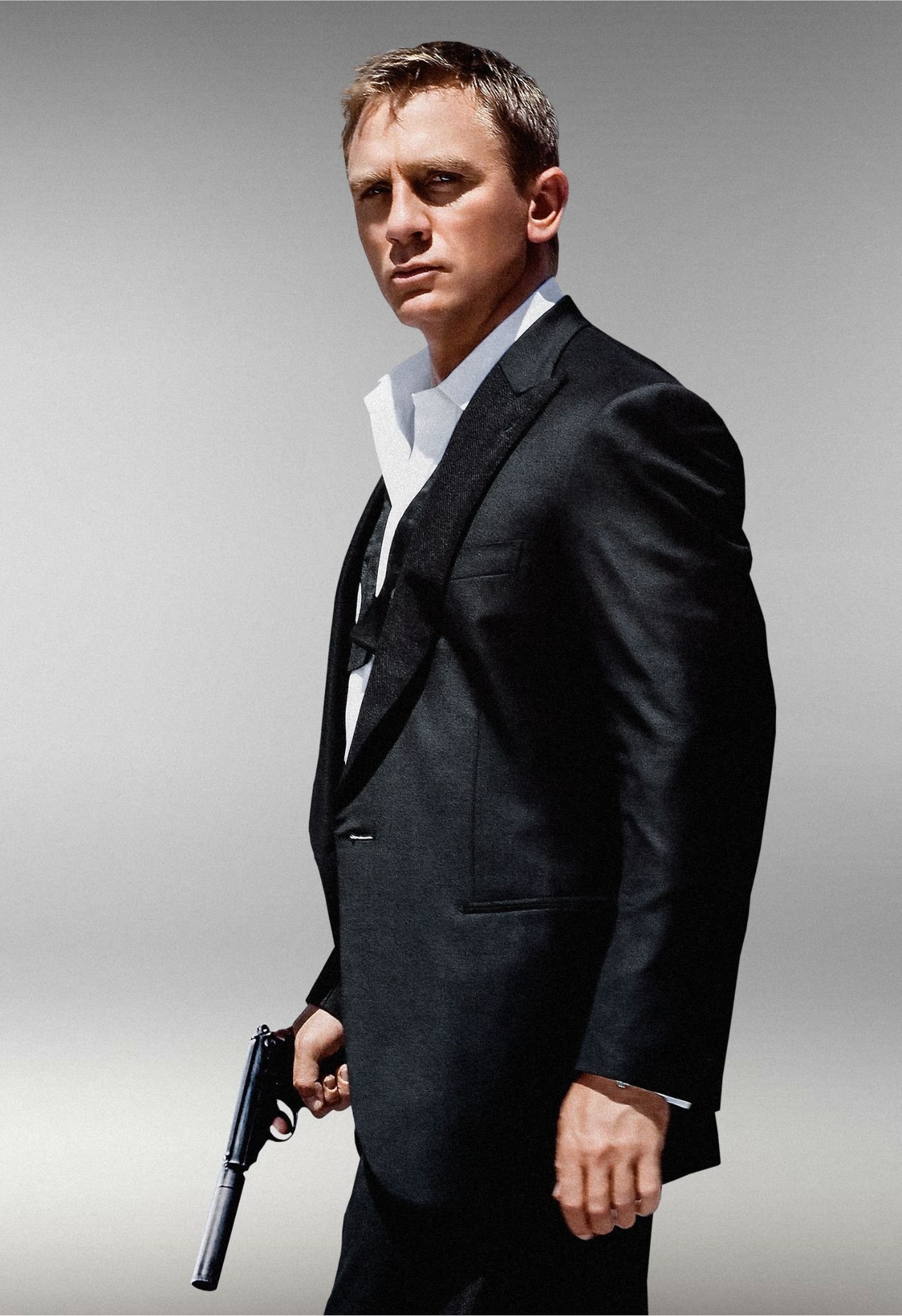
Thank God, because eventual Bond Daniel Craig would only say yes if the script was good.
I wasn’t aware of the whole casting saga at the time but reading about it in hindsight has been both unsurprising and SO satisfying.
Among the candidates for sixth Bond were non-Brits Hugh Jackman, Alex O’Loughlin, Julian McMahon and Antony Starr, none of whom would’ve pulled off a convincing accent (forgive me Julian McMahon, God rest your soul). Then there were better known Brits Christian Bale and Clive Owen (who turned it down) and Henry Cavill, who was only 22 at the time. Ridiculous. What they all have in common, though, is that they’re tall, brunette and could be perceived as suave.
Daniel Craig, on the other hand, was stocky, a bit strange looking and most offensively, blonde. Thankfully, casting director Debbie McWilliams and our girl Barbara Broccoli looked past the ‘right’ appearances of those other candidates and trusted in Craig’s abilities displayed in his stellar audition and previous work.
In November 2006, their faith paid off and everyone who’d complained looked like utter dipshits.
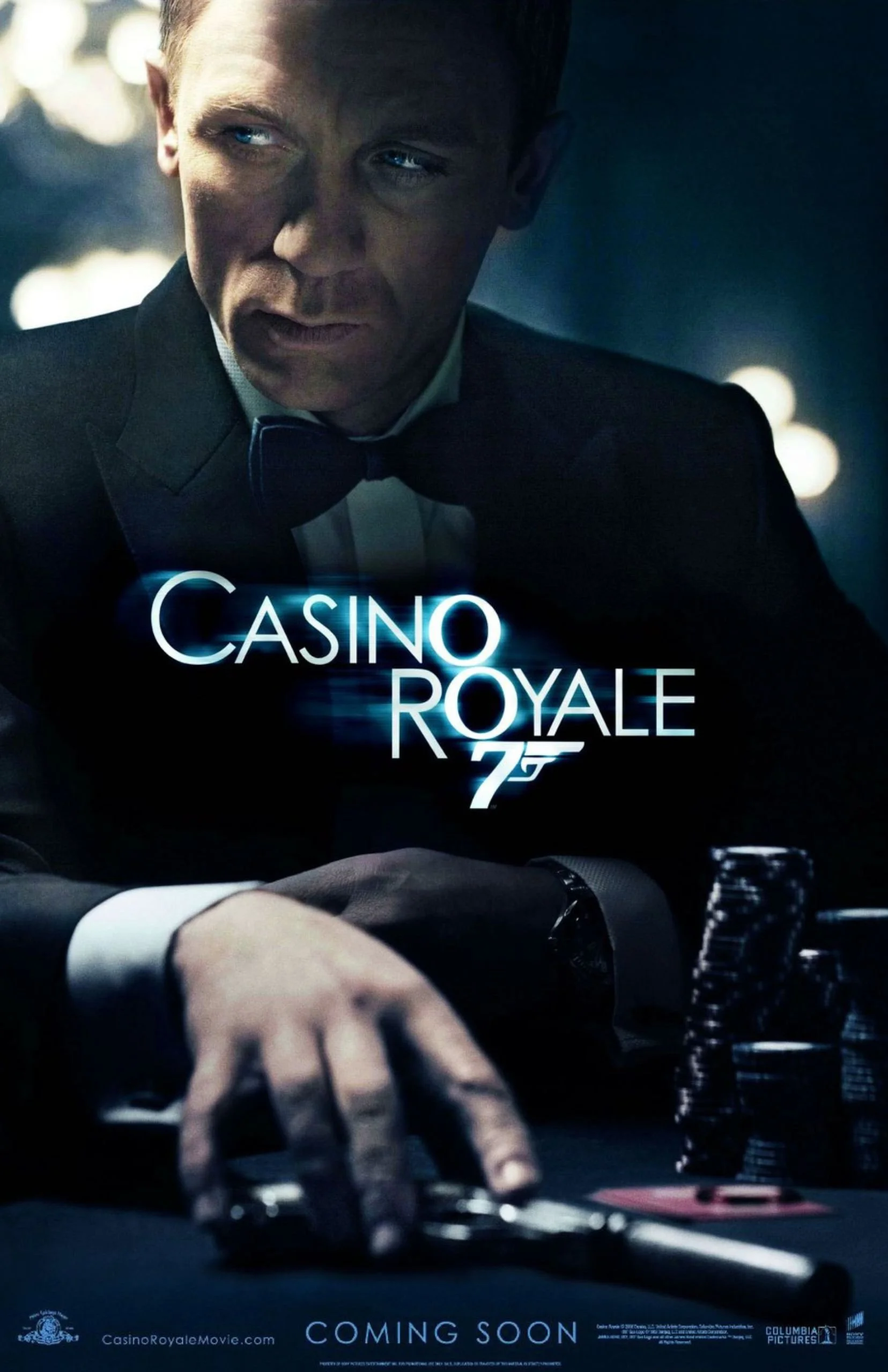
Casino Royale (2006)
Synopsis
Freshly 00’d James Bond must figure out who’s financing terrorism….by playing poker. The buy in? $10 million of MI6’s money and the shedding of his metaphorical armour.
Particulars
Director: Martin Campbell
Writer/s: Neal Purvis, Robert Wade and Paul Haggis
Producers: Michael G. Wilson and Barbara Broccoli
Stars: Daniel Craig as James Bond, Mads Mikkelsen as Le Chiffre, Eva Green as Vesper Lynd, Judi Dench as M, Jeffrey Wright as Felix Leiter, Giancarlo Giannini as Mathis, Jesper Christensen as Mr. White, Isaach de Bankolé as Steven Obanno, Tobias Menzies as Caterina Murino as Solange and Simon Abkarian as Alex Dimitrios
Budget: Between $102 million and $150 million
Shot: Czech Republic (including the Grandhotel Pupp), the Bahamas, Italy, the UK
Based on: Casino Royale, the first book in Ian Fleming’s James Bond series
Behold, a franchise brought back to life
Before embarking on this Bondathon I was pretty confident Casino Royale would remain my favourite Bond film. It’s the first one I remember seeing in the cinema. It’s the one I’ve watched most because, outside of the franchise, it’s just a great film. And it’s the first film whose West Australian Symphony Orchestra cinema performance I attended, an experience I wish I could relive.
Knowing everything that comes after and now, with the full context of everything that came before, that opinion has only further solidified.
Strap in; the praise’ll be comin’ and it won’t stop comin’.
The break from formula
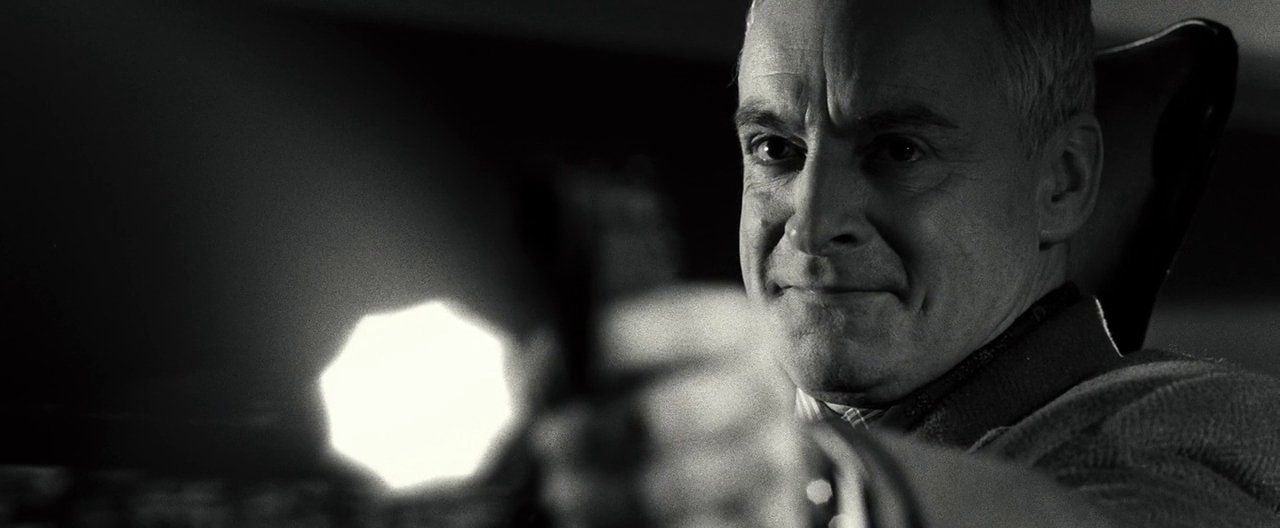
Where Die Another Day departs from formula out of carelessness, Casino Royale does it out of necessity, starting with something we’ve never had before: a black and white flashback establishing Bond’s 00 status.
We learn a lot from a little in this short pre-credits sequence: that Bond so obviously has ‘it’ that M is pre-granting his 00 status via this kill; that M knows Bond won’t have any qualms in terminating a colleague; and that, despite the messiness and brutality he shows in drowning Dryden’s contact in a grimy bathroom, there’s a hint of reluctance in his expression.
Of course, this reluctance is necessary; without it, the contact wouldn’t shoot at Bond and we wouldn’t get the gun barrel shot, a necessary relic of Bond film formula.
The title sequence
Carrying on the theme of honouring the book but not the movies, Daniel Kleinman’s animated credits (inspired by Fleming’s 1953 novel cover) and Chris Cornell’s energetic character song ‘You Know My Name’ complete a triumphant set up that primes us for Bond not as we know him, but as we will.
A NOTE ON THE SONG: Not only have I had the pleasure of hearing the song performed by WASO – I experienced Chris Cornell perform it live when opening for Linkin Park in 2007. I think it was my favourite part of that concert.
A Bond stripped bare
People say Daniel Craig plays Bond close to the way Connery did and I agree somewhat in the sense that his Bond often disobeys orders and prefers to operate on his own instincts.
But there’s a nastiness and lack of tenderness to Connery’s Bond that isn’t present in Craig’s. For me, he shares more DNA with Dalton’s Bond, who still manages to stay in M’s favour despite his unorthodox approach to following orders, refuses to stand down from what he views as his moral duty and (excuse the slut shaming) sleeps with far fewer women while on the clock.
What I love most about Craig’s Bond here is his difference in physicality. In the first big action set piece he plays him like a staffy chasing a cat through a construction site. Where Sébastien Foucan’s Mollaka takes a gymnastic approach to navigation, Bond bursts through walls like the Koolaid Man. He shakes himself off after crashing onto a skylight and rolling off. He’s not elegant in his choreography; he’s forceful and every bit the blunt instrument that M equates him to.
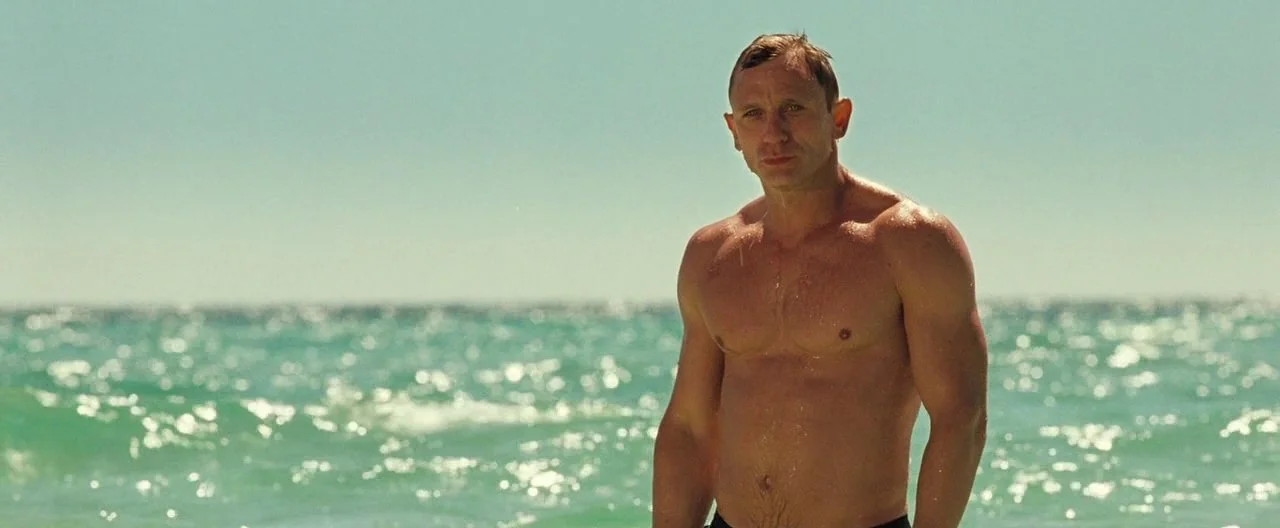
Early in the film M tells Bond “any thug can kill. I want you to take your ego out of the equation, and to judge the situation dispassionately.” But he can’t. We’re seeing Bond before he’s learned this lesson; before he feels the ramifications of letting his guard down, falling in love and ultimately, losing someone he loves.
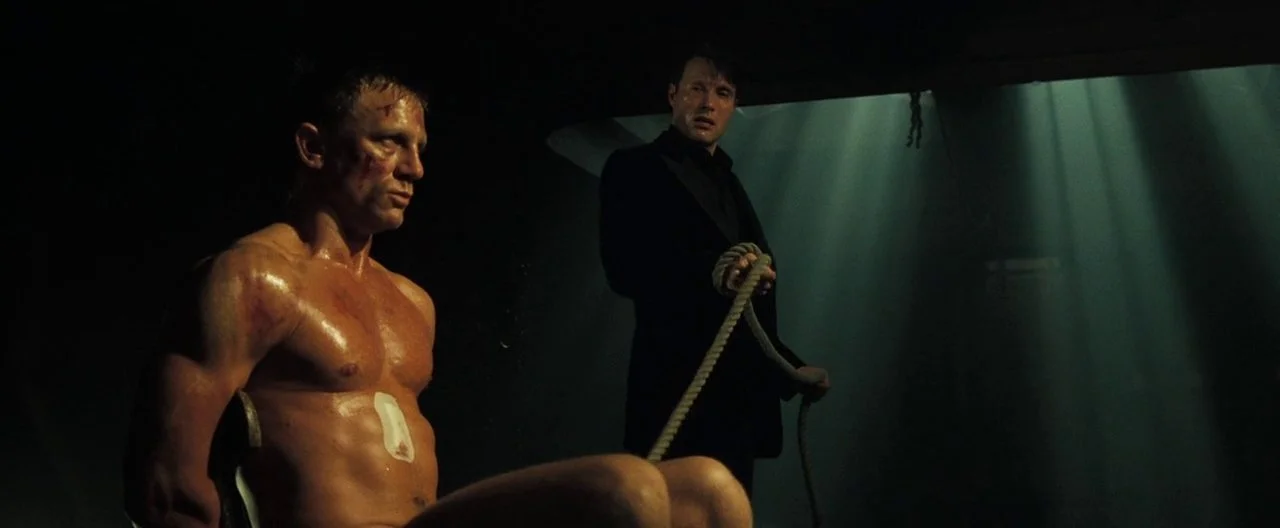
Casino Royale also shows Bond at his most objectified. It’s Daniel Craig in swim trunks that the camera zooms in on as he leaves the waves, not a Bond girl in a bikini. And let’s not forget the ball torture scene; if it wasn’t clear that this film is about his armour being stripped away, Bond naked in a hollowed out chair should hammer it in.
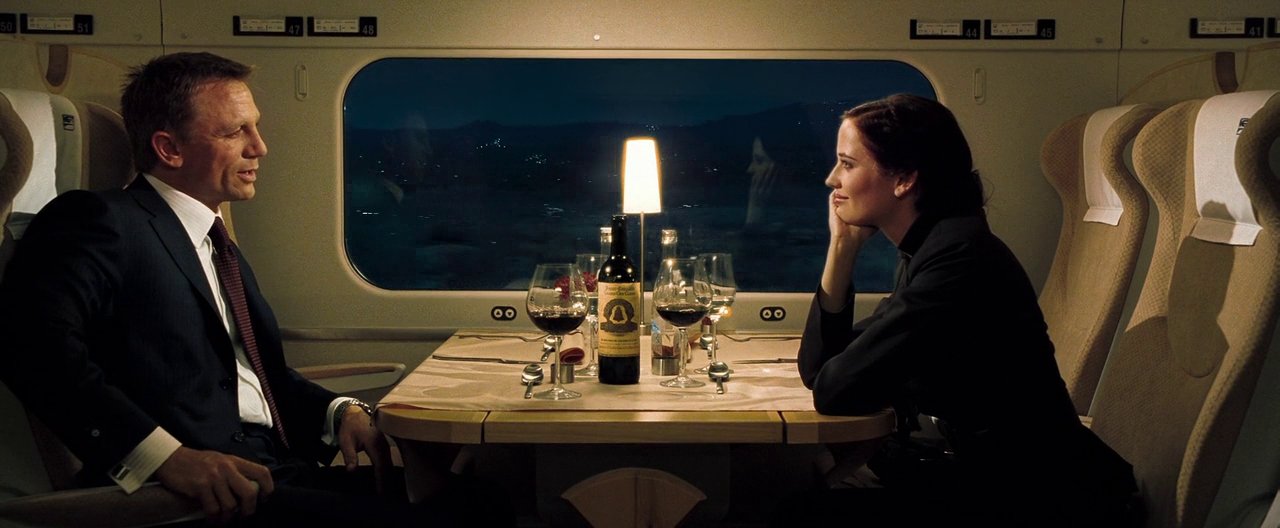
Vesper Lynd: keeper of funds and reader of Bond
I love a Bond film that gives its character introductions time to breathe and we certainly get that with Vesper Lynd, who first appears at the beginning of the second act but with a confidence that befits her impact on Bond’s arc.
“I’m the money,” she says upon plonking herself down opposite Bond in a train car, their resulting tete a tete as delicious as it is a functional lore dump. We learn more about Bond from this exchange than we’ve learned from any of his prior exploits: he’s an orphan, he’s got a chip on his shoulder about class and he’s as thrilled to be challenged by a woman as Vesper to be challenging him.
Eva Green is sublime in the role, her French/English hybrid accent adding a layer of mystique to a character that on the page is described as being born on a stormy evening and named after the evening. Like Bond, she has a hard exterior – he calls her out on it – and watching her vulnerability in turn bring out Bond’s is that rare thing (only really seen prior in On Her Majesty’s Secret Service) of an emotional centre.
The aftermath of the stairwell murder where she’s sitting, clothed, in the shower and Bond sucks the figurative blood off her fingers, is potentially the tenderest moment we get in the whole franchise.
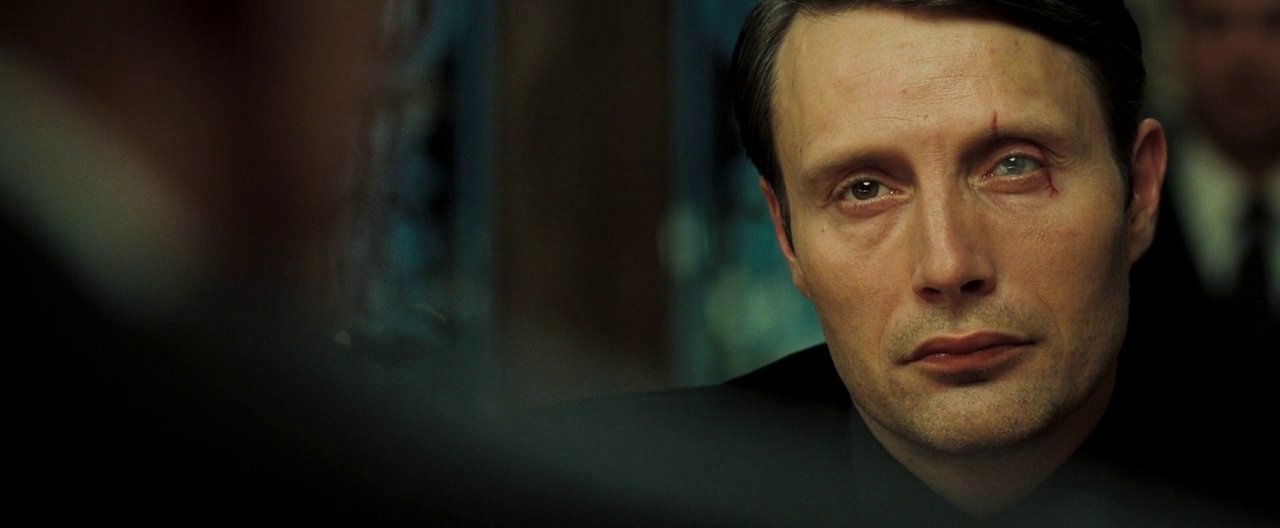
The other players
Casino Royale is the film that introduced me to my beloved Mads Mikkelsen and for that reason I owe it a debt. He’s great as Le Chiffre, who despite having an eye that weeps blood is a far cry from the SPECTRE villains of yesteryear. Rather, Le Chiffre is very realistic – a money man who’s not even a Big Bad but who, like anyone, must answer to the shareholders.
Jeffrey Wright is the first Felix Leiter with characterisation and who would reprise his role (in a timely manner, not counting David Hedison). His delayed introduction is a joy and watching him fumble his way through a game so far out of his league is a nice jab at the Americans.
I’m also a big fan of Giancarlo Giannini’s Mathis, a man wrongly marked as a double agent who loves framing people for murder by storing bodies in their cars and then alerting the authorities. That his story is resolved in Quantum of Solace is a gift.
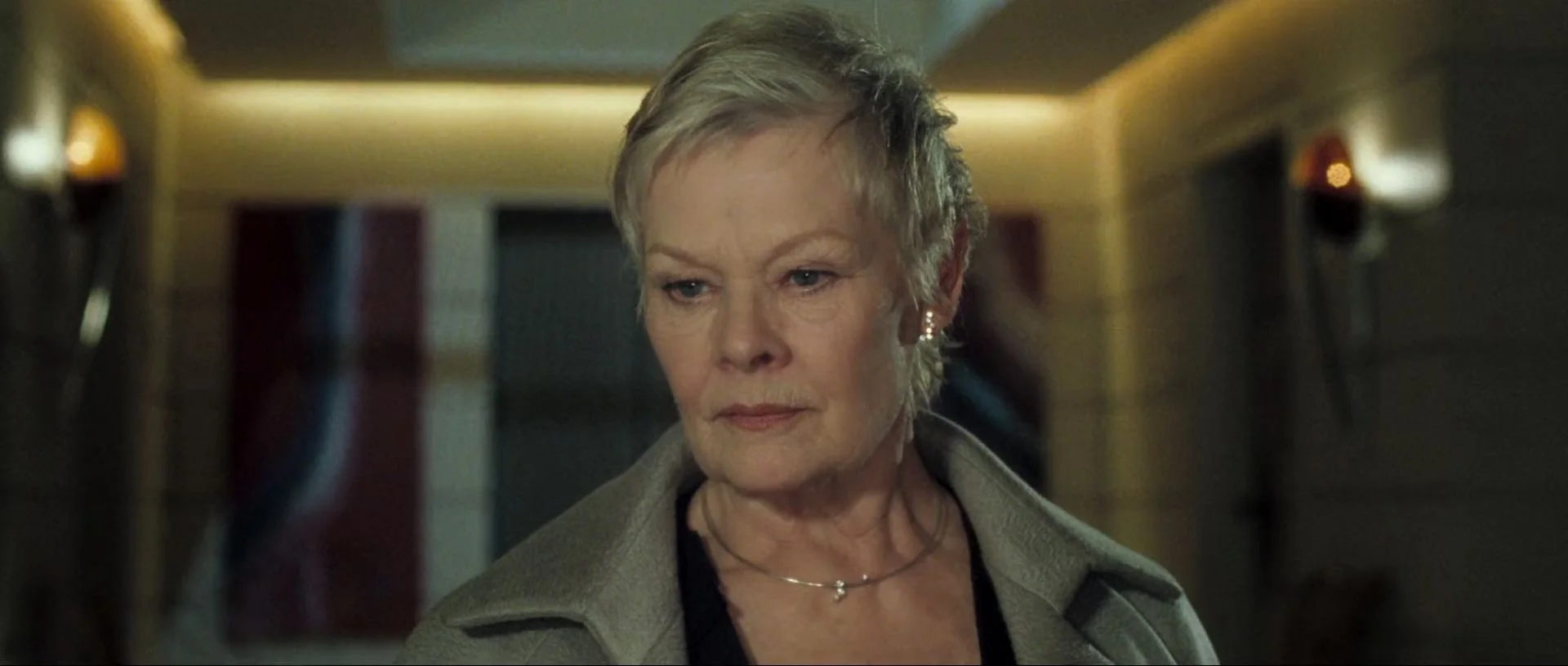
And leaving the best till last, we have Judi Dench as one of the few actors to have kept her role in an era transition (though as a new iteration, not a continuation). I love getting glimpses into M’s life and if there’s one thing I’m truly grateful for from the Brosnan era, it’s the expansion of her role. In Casino Royale she’s much more feisty, airing her grievances about the industry and the government – “Christ I miss the Cold War” – and admonishing Bond for breaking into her house and repeatedly accessing information that’s not meant for him. Theirs is the best M/Bond dynamic the franchise has ever seen, no contest.
The distinctive structure
Casino Royale has a really interesting four-act structure that feels very different. It goes from a noir opening inspired by The Spy Who Came in from the Cold to a familiar espionage setup, poker as action and a climax that builds to a romance fake ending. Bond tenders his abrupt resignation after (I clocked the dates) a MONTH in the role, which is pretty wild and an even worse track record than my own.
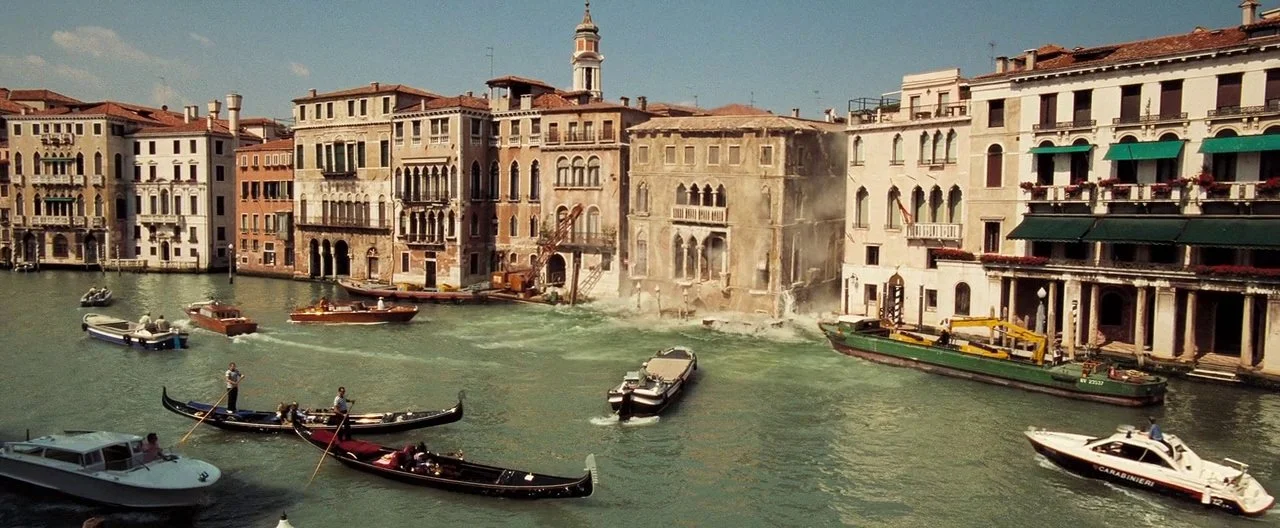
Then there’s an eleventh hour betrayal and a Don’t Look Now inspired sequence in Venice, creating the discomfort and impending sense of doom that ends in tragedy for Bond and Vesper. The resolution that comes after “the bitch is dead” isn’t a resolution at all but the first crumb in a continuing saga; Bond finally catches Mr White and gets to deliver his verbal introduction right before the credits. Only once the film is through is the formula restored.
Poker as the action
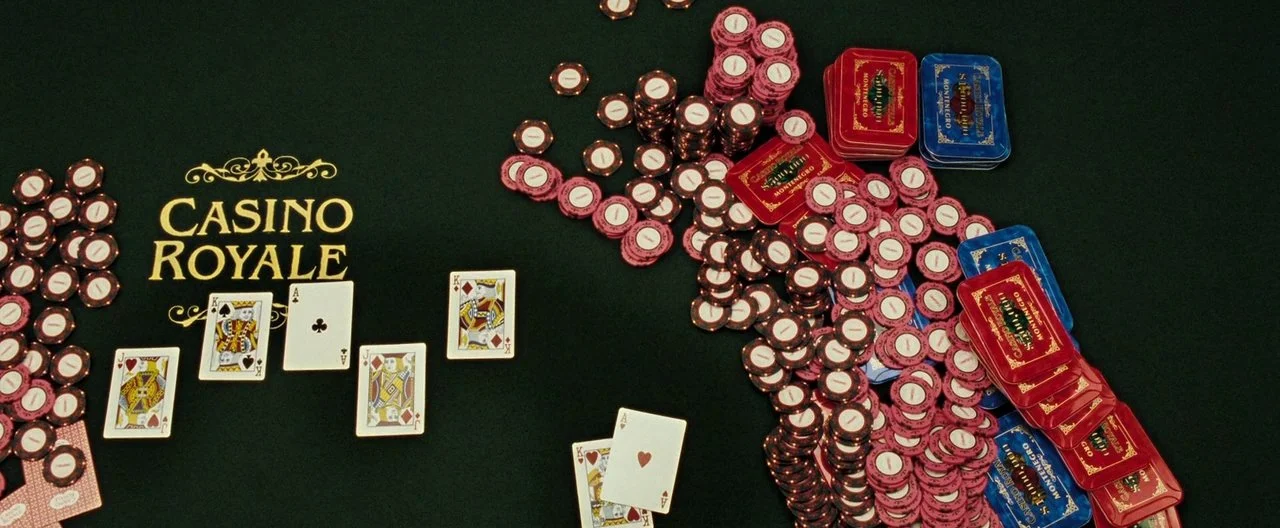
Apart from the palms-are-sweaty opening action sequence (immense credit to Sébastien Foucan, founder of parkour) and the airport bomb plot, Casino Royale’s second act confines its action to the titular two-day poker tournament.
I know nothing about poker – nor did Daniel Craig, according to Mads Mikkelsen – but watching this motley crew of characters play with ever increasing stakes, fake bluffs and big last minute wins is a thrill. That Martin Campbell was able to make it so is a testament to his directing. With wipe transitions, a poisoning attempt, a stairwell skirmish and multiple outfit changes, it’s easy to forget that we’ve largely been watching people sit in a room for half an hour.
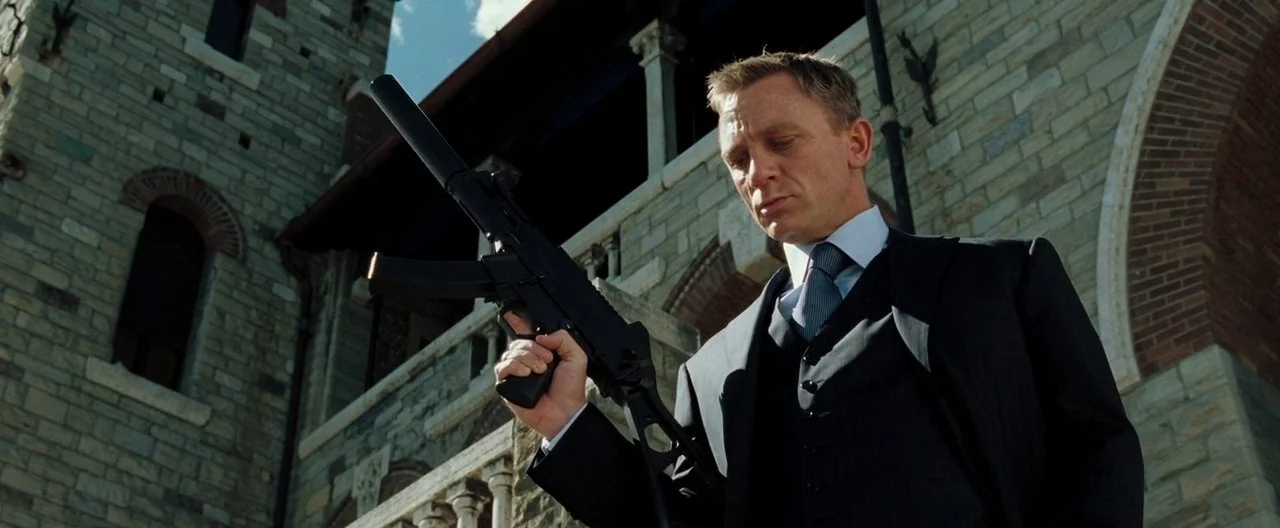
I have no notes for Casino Royale. I think it’s excellent both as a Bond film and as a standalone spy film in its own right. It set the bar for Bond characterisation and I bid Denis and the gang good luck for Bond 26.
RANKING CATEGORIES (70%)
Bond execution = 10
Villain = 8
Bond girl(s) = 9
Song = 9
Opening titles = 10
Plot/action/gadgets = 8
Franchise identity = 10
PERSONAL ENJOYMENT (30%)
10/10