The Dalton Years
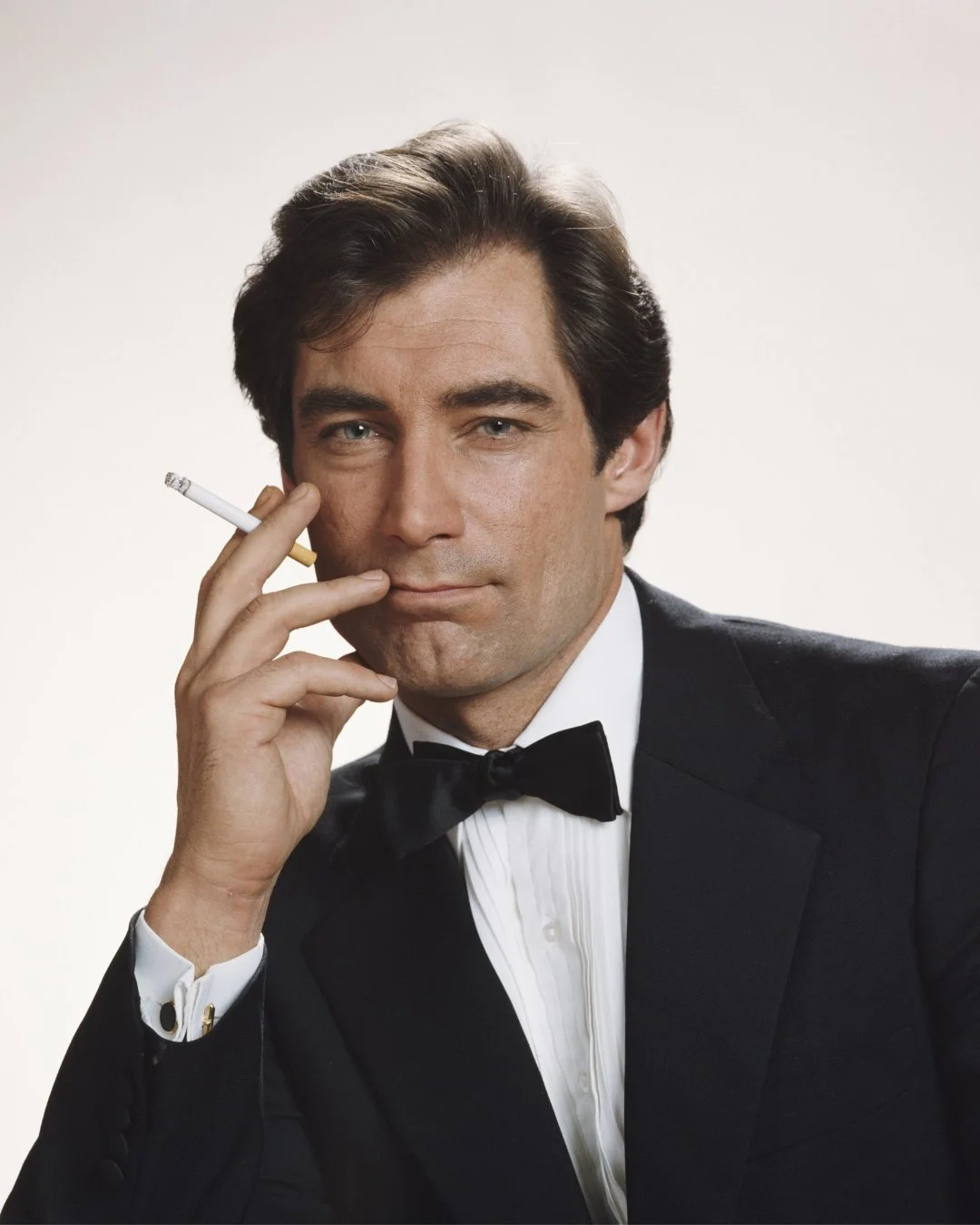
My introduction to Timothy Dalton was through Edgar Wright’s Hot Fuzz as Simon Skinner, supermarket store owner and theatrical villain who likes to say dastardly things at crime scenes that very obviously point to his involvement.
I was even more convinced by his quality in Penny Dreadful as Sir Malcolm Murray, an Allan Quatermain stand-in (a loose Bond connection with Sean Connery) and surrogate daddy of Vanessa Ives (a second Bond connection with Eva Green) who hunts supernatural things in atonement for the son he let die and the daughter he let disappear.
He’s incredibly captivating in both – something to do with his voice and the emotional ambiguity on his face when he smiles – and when I last attempted a comprehensive Bond watch and never completed it, it was because I was so intrigued by him that I chose to start with his era.
There’s an interesting tension to the way he plays Bond that comes from an edge of danger mixed with this refined gentlemanly quality; it’s hard to describe but it’s there, and I think Eon was aware of it for some time.
Dalton had been on their radar for Bond multiple times before; it’s debated whether it was first around On Her Majesty’s Secret Service or Live and Let Die but he was considered again before For Your Eyes Only (which he declined due to not liking the direction the films were taking) and during the Octopussy chaos.
Ultimately, the stars didn’t align until after poor old Roger Moore had the nail put in his coffin with A View to a Kill and even then, it wasn’t a lock. Dalton had a scheduling conflict and the producers, faced with having to wait a mere six weeks for him to become available, offered the role to Pierce Brosnan. Ironically, Brosnan’s casting announcement led to Remington Steele being renewed, which in turn led to his Bond offer being withdrawn and Dalton finally being available.
And thank God, because to this day I think Dalton is the most alluring Bond, the smoothest sounding, the most principled and, if we’re going by percentage of good films in his tenure, the most successful.
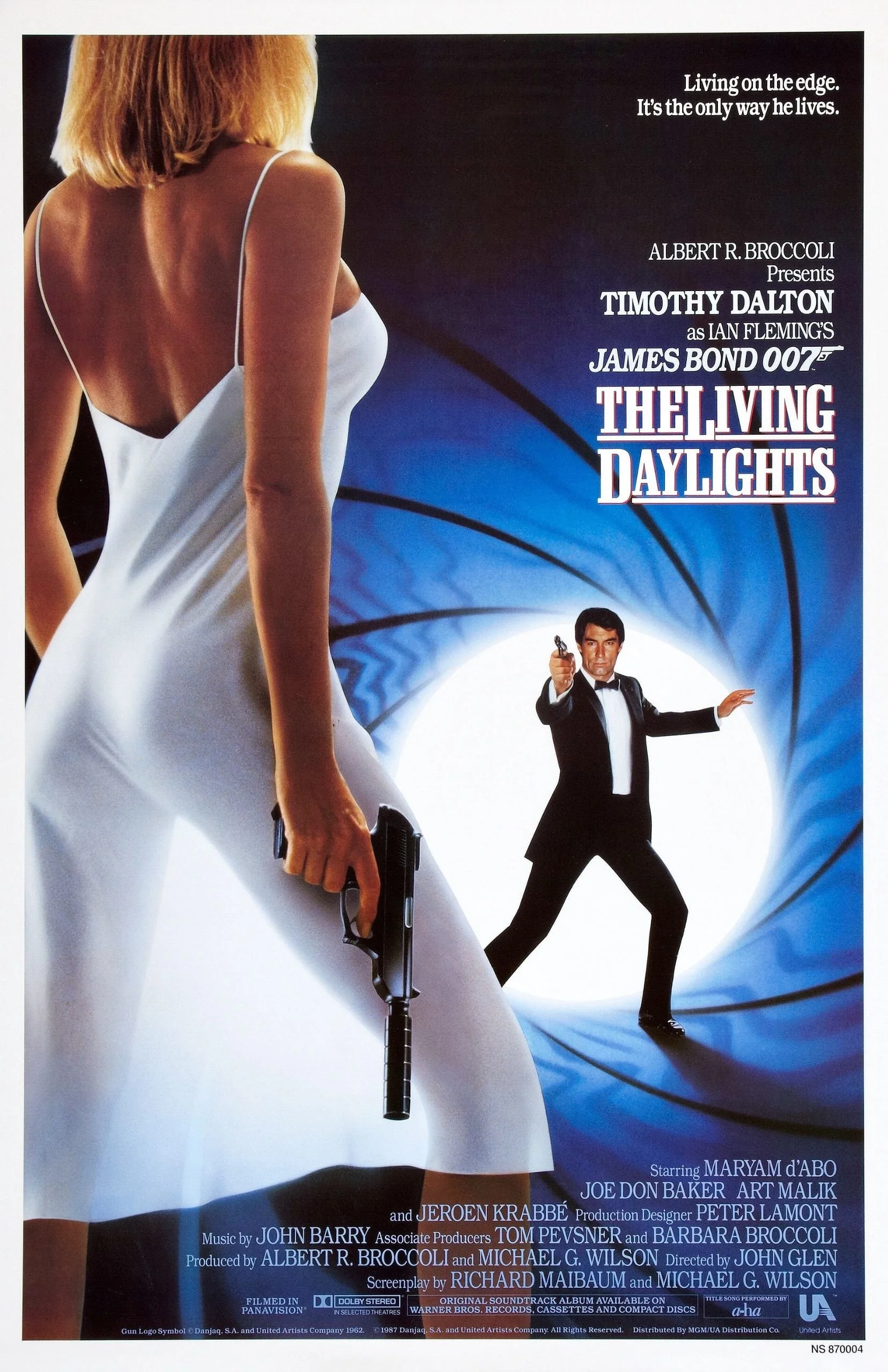
The Living Daylights (1987)
Synopsis
Bond helps a couple of Soviets (and a cello) defect, only to find that one of them never intended on staying defected. Pulling this thread leads him to Afghanistan, where he makes pals with some friendly Mujahideen opium dealers, engages in horseback battle and commandeers a cargo plane for the journey home.
Particulars
Director: John Glen
Writer/s: Richard Maibaum and Michael G. Wilson
Producers: Albert R. “Cubby” Broccoli and Michael G. Wilson
Stars: Timothy Dalton as James Bond, Maryam d'Abo as Kara Milovy, Jeroen Krabbé as General Georgi Koskov, John Rhys-Davies as General Leonid Pushkin, Art Malik as Kamran Shah, Thomas Wheatley as Saunders, Walter Gotell as General Anatoly Gogol, Robert Brown as M, Desmond Llewelyn as Q and Caroline Bliss as Moneypenny
Budget: $40 million
Shot: Vienna, the Rock of Gibraltar, Morocco, the Mojave Desert, the UK and Pinewood Studios
Based on: “The Living Daylights” from Octopussy and The Living Daylights, the 14th and final book (a collection of short stories) in Ian Fleming’s James Bond series
Oh we are SO back
I remember liking The Living Daylights a lot when I first saw it and I’m thrilled to say the sentiment has not changed. It helps that it came as a huge refreshment off the back end of the Moore era but as a film in and of itself, it just works.
Timothy Dalton’s Bond is so different from those before him and it takes no time at all to ‘get’ him; he’s emotionally guarded (which we understand is due to past events), he’ll land a quip when he needs to but he’s otherwise quite serious and he’ll follow the rules until the rules conflict with this own moral compass. He’s darker, cooler and more complex than his predecessors and The Living Daylights does a great job of conveying this.
Here are some highlights.
The bookend action sequences
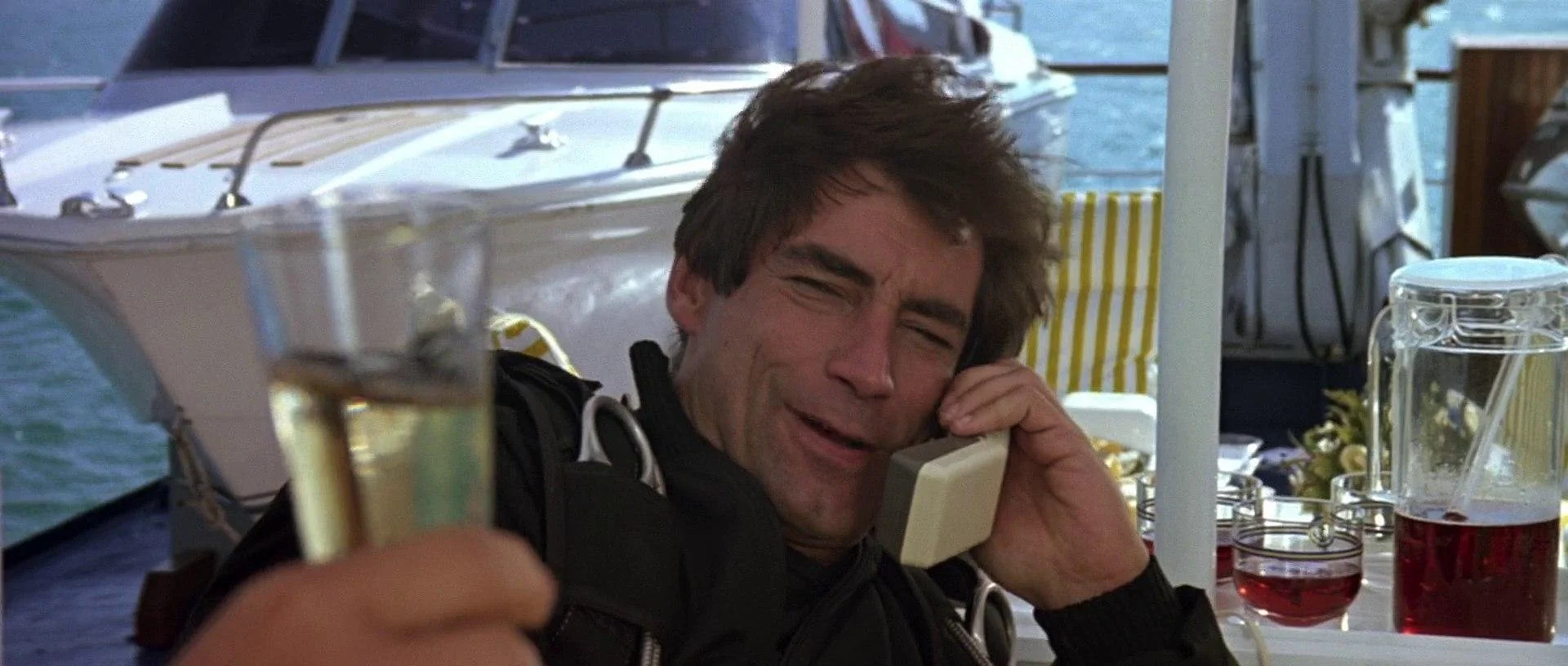
Parachuting into a training sequence in Gibraltar only for it to be crashed by a Soviet playing with real bullets instead of paint is an excellent intro to a grittier new Bond and I think it’s one of the more iconic Bond openings. It’s still got a sense of fun – “Hold on, you're dead” says a very British training operative as Bond and the assassin barrel past in a Land Rover – but it’s also very tactile, with Bond opening his backup parachute from inside the car, propelling himself out as the assassin plummets to his death. Awesome.
The cargo net fight at the end of the film is also awe inspiring and that’s because stunt performers BJ Worth as Bond and Jake Lombard as Necros genuinely were hanging from a 1,500-pound cargo net suspended from the back of a cargo plane flying over the Mojave Desert.
The song and title credits
By virtue of how often I listen to it, a-ha’s ‘The Living Daylights’ is my personal favourite Bond song. I play it on repeat and I think it’s so different from what came before (excluding ‘A View to a Kill’, perhaps) and what comes after. The silhouettes in Maurice Binder's title credits interact with the lyrics and it just feels like there’s more cohesion than there has been in previous title credits.
The score marks John Barry’s final for Bond and it’s a lovely blend of 80s synth and classic orchestra. While Barry and a-ha did not work well together, it meant that we ended up with two versions of the song. Por qué no los dos indeed.
We also get a couple of songs by The Pretenders: "If There Was A Man", which plays over the end credits, and the one that Necros always has blaring on his Walkman, "Where Has Everybody Gone?". Spoiled.
The return of the Aston Martin
Okay, so it’s not a DB5 but it’s also not a Lotus or an AMC. Never mind that Bond is “just taking it for a test drive” and has the car for a grand total of about 15 minutes before crashing it on a frozen lake and triggering the self-destruct. Q must’ve been so mad.
A better blend of humour and serious stuff
Bond uses a cello case as a bobsleigh. He makes sure to declare the cello when crossing the border from Czechoslovakia into Austria. He says they’re not going back for the cello when he and Kara are fleeing, only for a cut to reveal they do indeed gone back for the cello. “Why didn't you learn the violin?” he remarks and I’m realising most of Bond’s lighter moments in The Living Daylights are cello-based. As a former child cello prodigy (Mr Stapleton’s words, not mine), I approve.
Strong allies
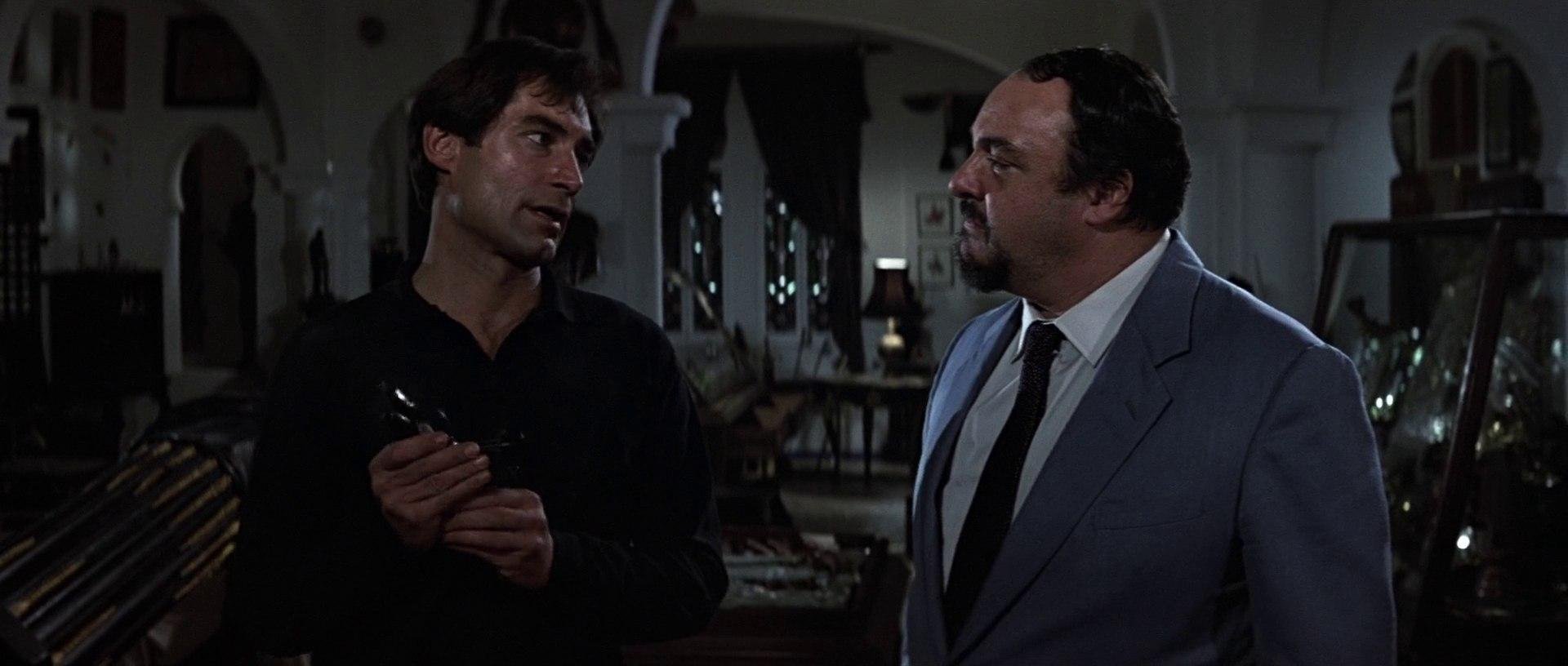
This film gives John Rhys-Davies another classic 80s ally character in Pushkin, a Soviet general who takes over the KGB from General Anatoly Gogol and whose play along with a faux assassination attempt is very fun.
Art Malik also has a wonderful intro as the guy Bond happens to incidentally free from a holding cell and turns out to be the leader of the Mujahideen. I enjoy his accent fake out, especially since it kinda reveals the typecasting he faced in films like True Lies.
Bond/Bond girl chemistry
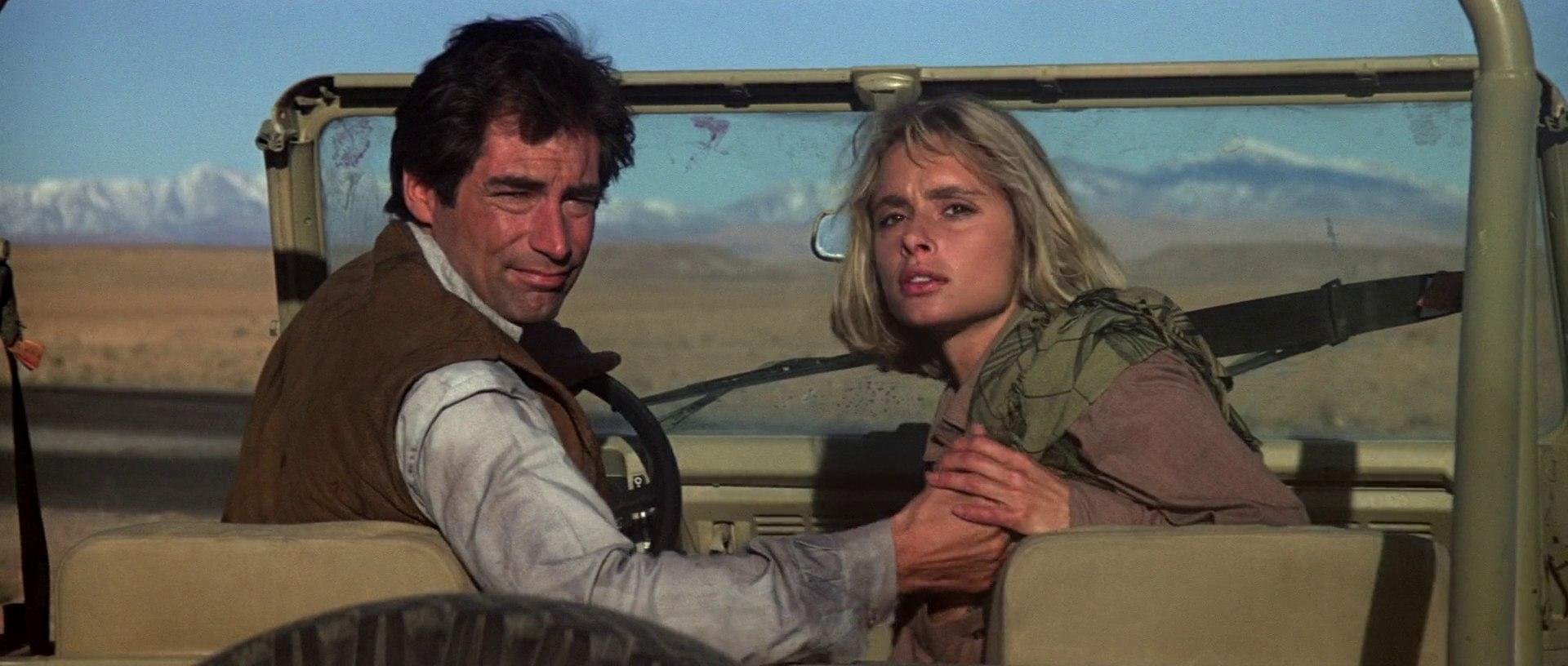
I may be biased in liking Kara simply because she’s a cellist but I do think she has chemistry with Dalton and I believe the relationship that forms between them as the film goes on.
I also appreciate that, unlike many Bond girls that came before her, she’s always fully clothed and not visually objectified. If anything, cello is her identity and the best thing Bond can do for her (apart from keep her safe) is to help her get permanent residency in the West so she can have an orchestra career. Yay for progress!
Finally, the plot is maybe asking a bit much of the audience as we go from snow to desert across the globe but other than minor gripes, The Living Daylights remains one of my favourite Bond films.
RANKING CATEGORIES (70%)
Bond execution = 9
Villain = 7
Bond girl(s) = 7
Song = 9
Opening titles = 7
Plot/action/gadgets = 7
Franchise identity = 8
PERSONAL ENJOYMENT (30%)
9/10