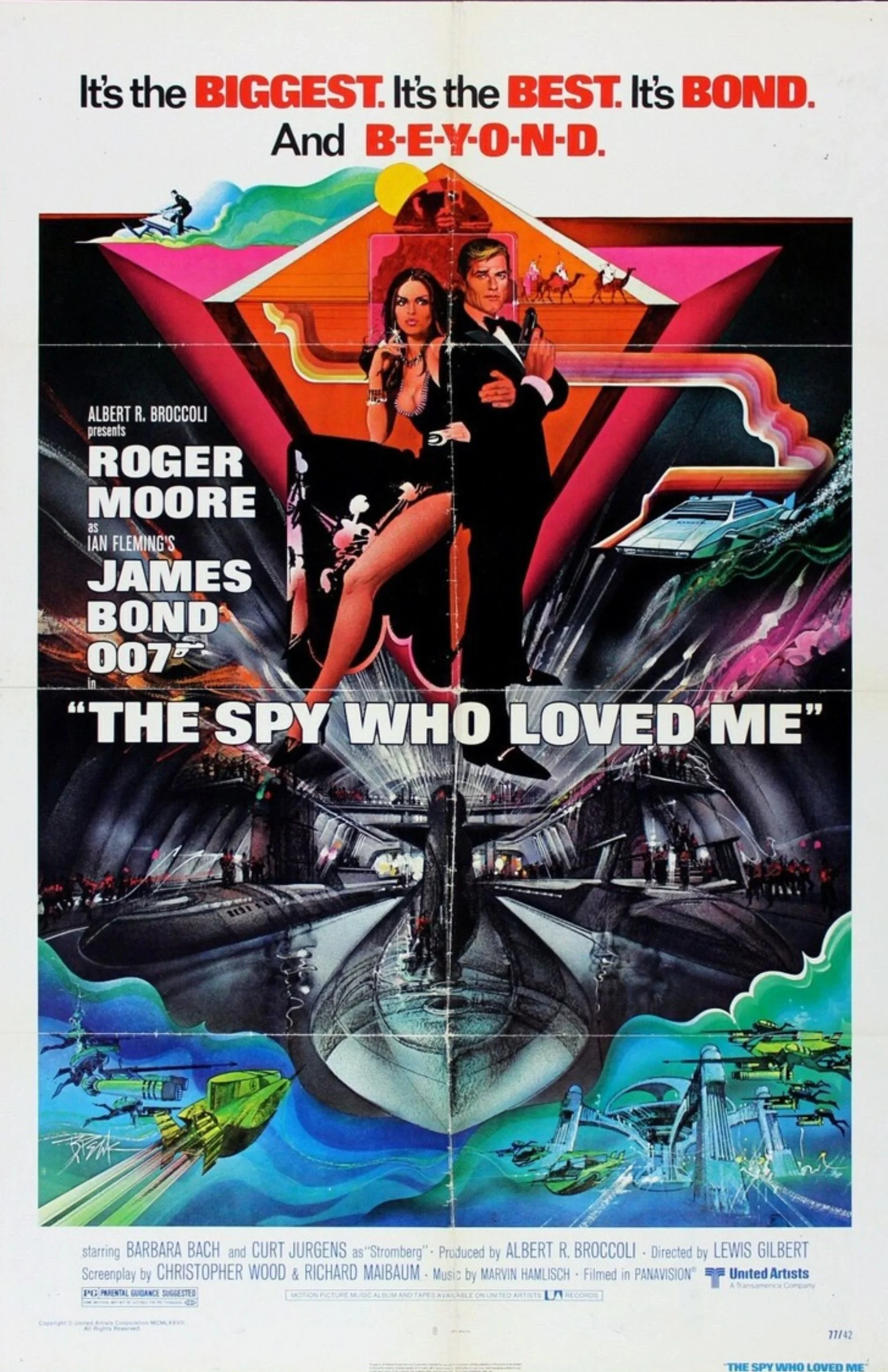
The Spy Who Loved Me (1977)
Synopsis
Bond meets a female KGB agent whose boyfriend he accidentally killed while on a mission in Austria but in the interest of a British/Soviet truce, the pair must work together on their next mission. The mission? Defeat a merMAN with webbed fingers and Atlantis aspirations, along with his chompy henchman who has the durability of a tardigrade.
Particulars
Director: Lewis Gilbert
Writer/s: Christopher Wood and Richard Maibaum (with an uncredited rewrite by Tom Mankiewicz)
Producers: Albert R. “Cubby” Broccoli (Harry Saltzman had to leave for financial and person reasons)
Stars: Roger Moore as James Bond, Barbara Bach as Anya Amasova, Curt Jurgens as Karl Stromberg, Richard Kiel as Jaws, Bernard Lee as M and Lois Maxwell as Moneypenny
Budget: $13.5 million (and you can fucking feel it)
Shot: Sardinia, Egypt, Malta, Scotland, Hayling Island (UK), Okinawa, Switzerland, Mount Asgard (Canada) and Pinewood Studios
Based on: The Spy Who Loved Me, the 10th book in Ian Fleming’s James Bond series
The Spy Who Skied Off A Fucking Cliff, to Thunderous Applause
After The Man with the Golden Gun received a poor response (both critically and commercially) and one half of the producer duo – Harry Saltzman – had to sell his share and leave the franchise, the next film had a big job to do.
So, with returning director Lewis Gilbert at the helm, a completely new script (Ian Fleming wouldn’t let them use the plot of the book) and an extra $6.5 million to play with, the franchise returned with The Spy Who Loved Me, a bombastic, confident and endlessly fun entry in the Roger Moore era that in its first five minutes, became one of my favourite Bond films.
Here’s why.
The stuntman who stole my heart
That fucking stunt
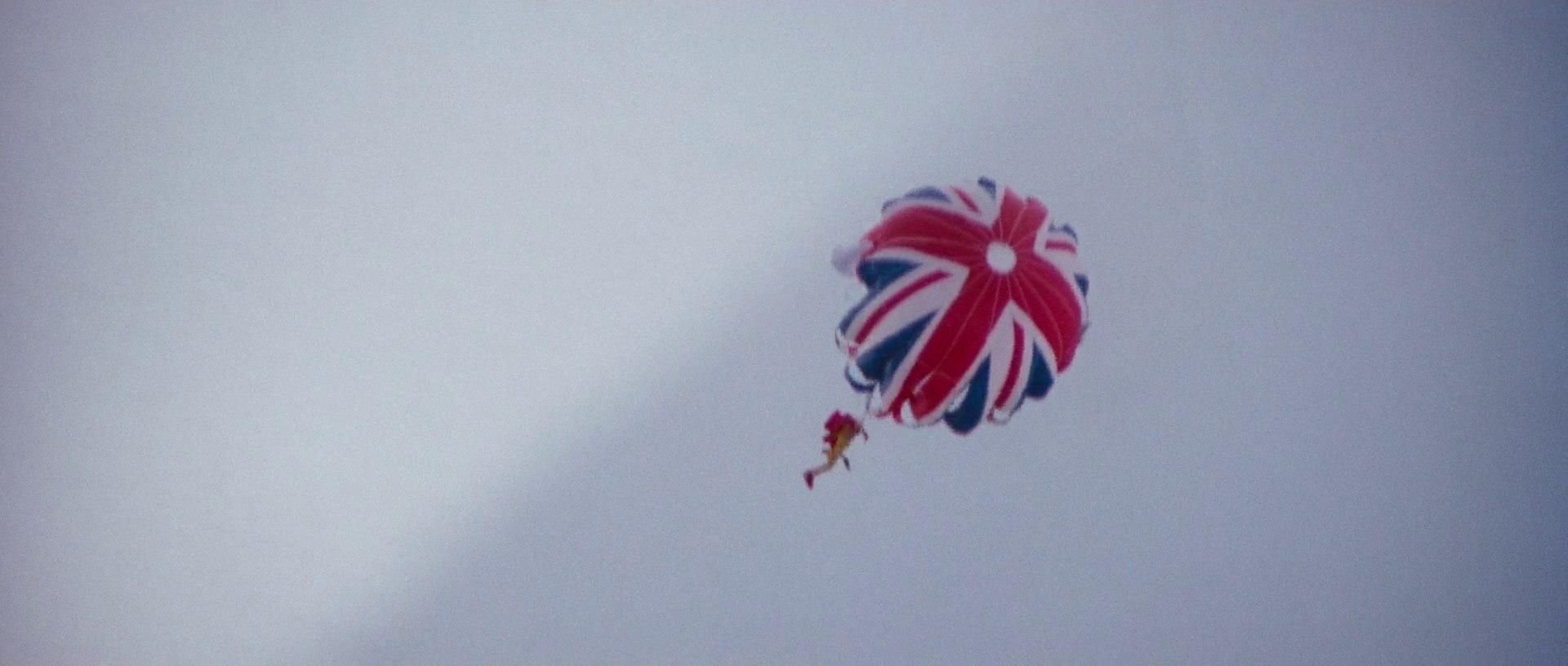
The Spy Who Loved Me must be one of Tom Cruise’s favourite films because it opens with two nuclear subs vanishing and then a massive, breathtaking stunt where the performer (Rick Sylvester, an absolute legend) skis off a snowy cliff, falls in complete silence and then deploys a parachute emblazoned with the Union Jack, a moment that had my jaw on the floor and fist in the air.
Naturally, you think you’re going to get an action song – perhaps a return to the Wings-style rock of Live and Let Die. Psych! The transition from the film’s epic opening into a Carly Simon romance ballad is almost as ballsy as the stunt itself but for me, it really works and complements the confident approach Lewis Gilbert and composer Marvin Hamlisch are taking.
That title sequence and song
This is really the first title sequence where art direction goes beyond projecting things onto bodies and I think Maurice Binder sets a new standard. The women marching and doing gymnastics on the gun barrel is visually striking and suits the song’s tempo.
I’d heard ‘Nobody Does It Better’ before and thought nothing of it but after seeing and hearing it in its intended context, I’ve become irrationally obsessed. The twinkly piano intro and those 70s ELO-like strings towards the end give it a different type of musical richness than the orchestral swells and Big Band brass of previous themes.
The song is doing two jobs: scoring the central enemies-to-lovers plot and acting as a character anthem – like ‘You Know My Name’, like ‘Licence to Kill’ – that, rather than just echoing the film’s title (it was the first theme song to not do so), acknowledges who the audience is here to see. I think it does both jobs well.
The confidence of its tone
Gilbert wanted to fix what the previous two Roger Moore films were doing in writing the character the way Connery played him rather than the characterisation in the books, which is “very English, very smooth, good sense of humour".
Roger Moore’s performance in The Spy Who Loved Me is defined by this new approach and as such, every line he delivers and every amusing facial expression lands precisely as it should. His performance is undoubtedly camp and the film itself, silly, but it dials down the slapstick to a far more palatable level than The Man with the Golden Gun and it’s so enjoyable that disbelief is happily suspended for 125 minutes.
There’s also a meta quality to the film’s tone that feels ahead of its time – not so much self-parody but more an awareness of its surroundings and an acknowledgement that it’s here to entertain. The multiple Jaws references, for instance, are the first time I’ve clocked a specific homage to something outside of Bond’s remit.
All the scale that money can buy
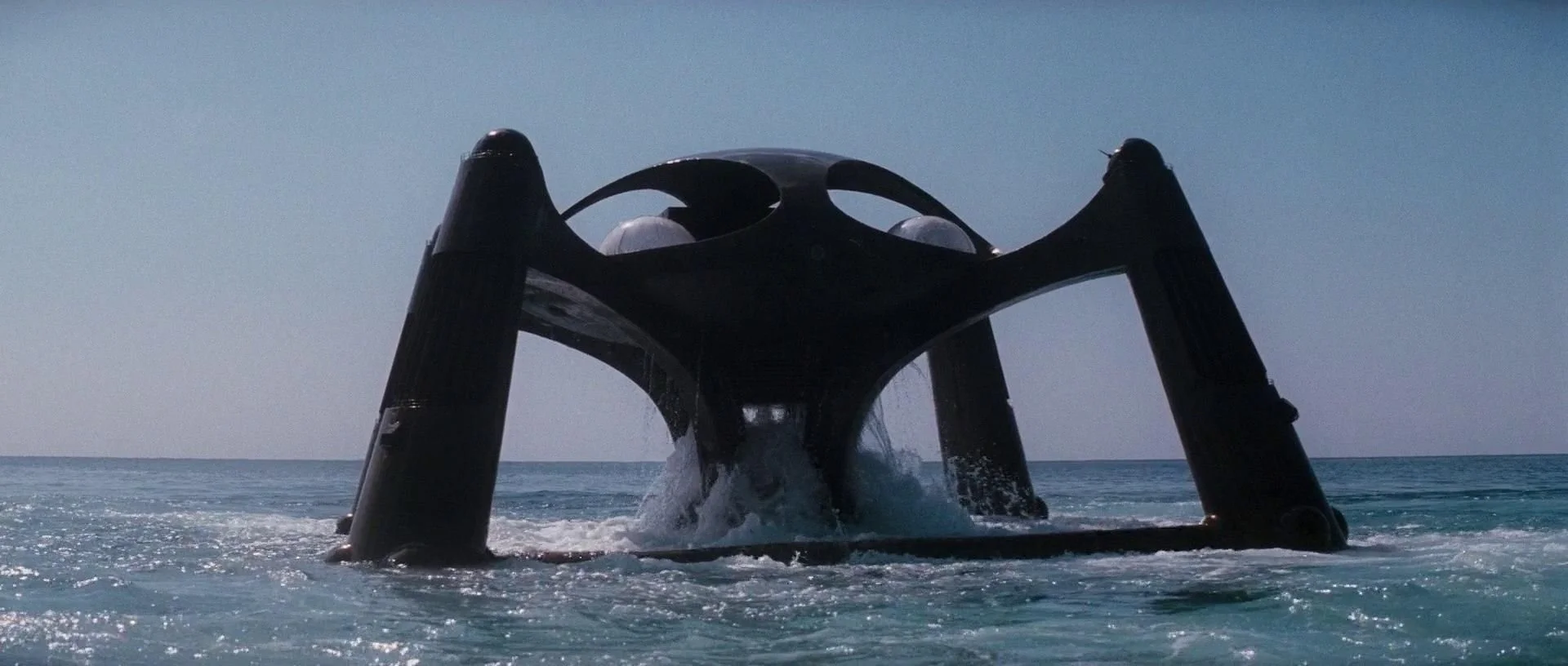
The Man with the Golden Gun had the same budget as its four predecessors, so the 6.5 mill bump given to The Spy Who Loved Me is kind of a big deal. Thankfully, it was money well spent and you can see it in the extensive locations (on land, off piste, underwater), stunts and action sequences and most evidently, in Ken Adams’ exquisite production design (for which the $1.8 million 007 stage was built).
Henchman outshining the villain
While primary villain Karl Stromberg is ironically a bit of a wet fish, his henchman more than makes up for it. If Hervé Villechaize’s Nick Nack was treated with unfair unseriousness (he was), then Richard Kiel’s Jaws is given a reverence befitting his stature. This fucking guy has T-1000 level durability and when he enters a tiger shark’s domain, it’s the tiger shark who dies. Being in the grips of Jaws is the closest Bond has come to realistically dying and it’s a big contributor to the tone being more balanced.
Where it falters
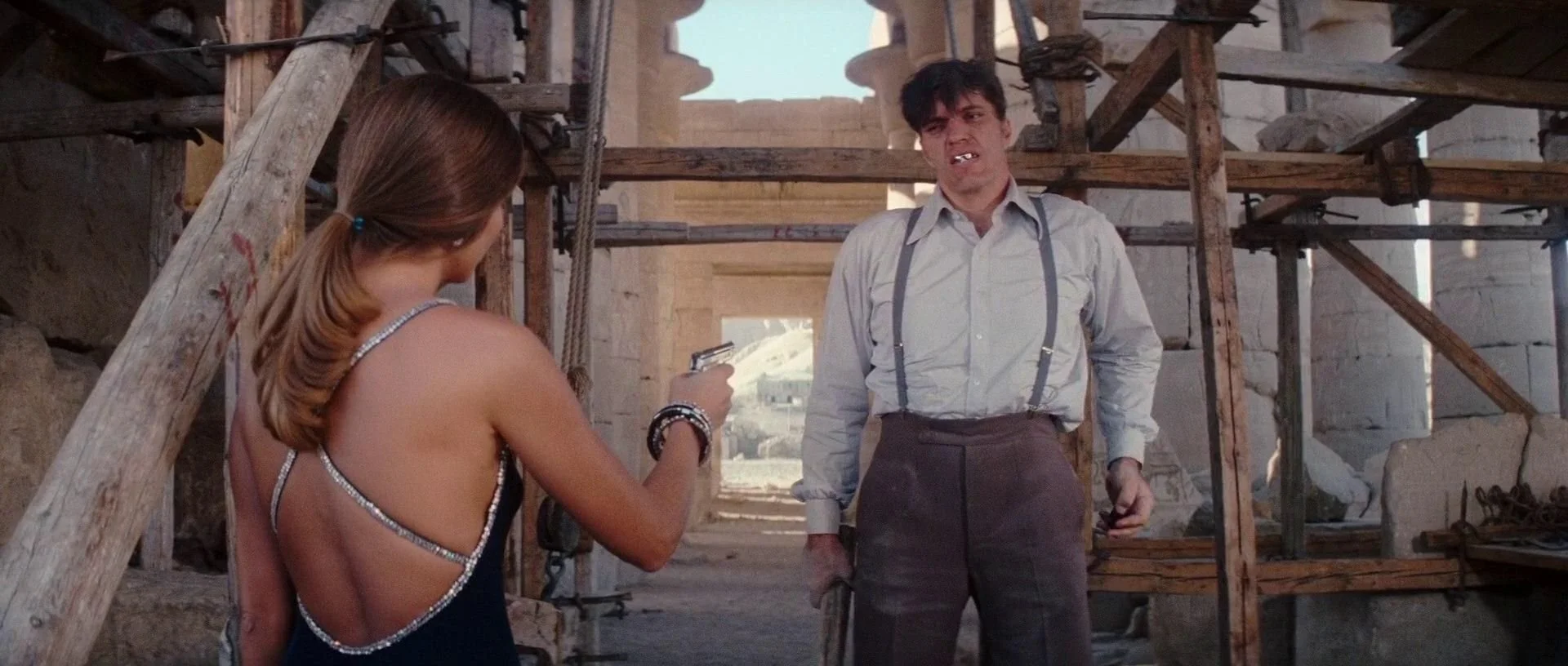
I think that if The Spy Who Loved Me had also nailed the Bond girl (pardon the pun), it would be a Top 5 film in the franchise. I’m not sure who’s to blame for Anya’s lack of impact and grit; the writing? Barbara Bach’s performance? The fact that she was only cast four days before principal photography began and thought she was auditioning for a much smaller role? Oh, it’s probably that last one.
To pull off a Pussy Galore level female foil would’ve required someone with much more presence and personality than Bach, an American model (and Ringo Starr’s wife?) who is stunningly beautiful but not much else. Then again, she can only work with what’s on the page and unlike Pussy or Tracy or Vesper Lynd, Anya doesn’t come from any of Ian Fleming’s pages; if she had, she’d have been Viv Michel, the female narrator of the first two thirds of the book who presumably gets a lot more characterisation.
Still, what The Spy Who Loved Me lacks in a strong Bond girl it makes up for with pretty much everything else. It’s definitely the strongest Moore entry in my journey thus far and if reports are correct, I suspect there’s nowhere to go but down (off a cliff, in free fall).
RANKING CATEGORIES (70%)
Bond execution = 9
Villain = 8
Bond girl(s) = 5
Song = 8
Opening titles = 7
Plot/action/gadgets = 9
Franchise identity = 8
PERSONAL ENJOYMENT (30%)
8/10