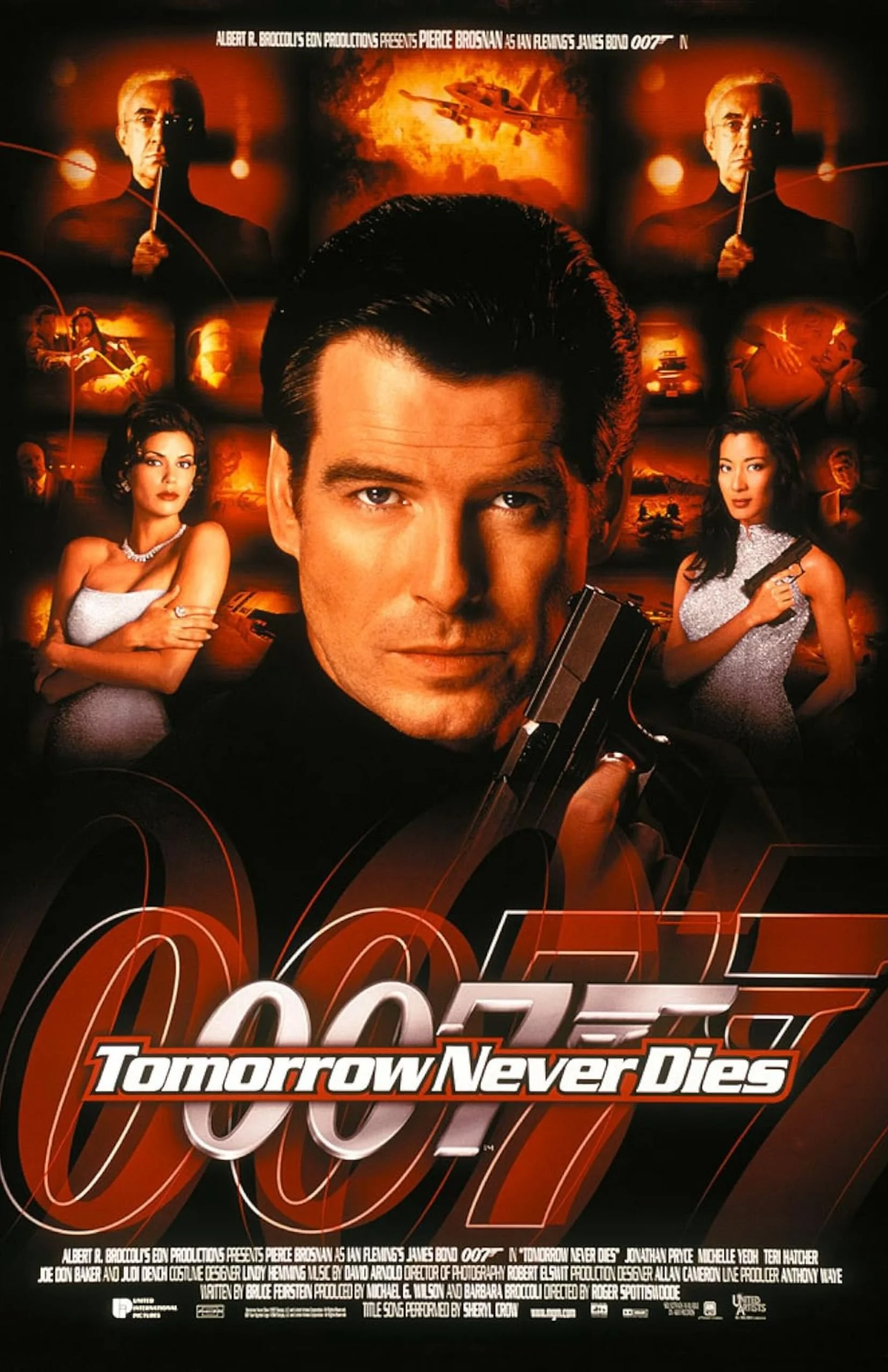
Tomorrow Never Dies (1997)
Synopsis
A media monopolist who two-finger types his own headlines is distributing fake news on a global scale in the hopes it’ll stoke another world war, which will be very profitable for his printing press. In the interest of independent journalism, Bond goes gonzo. But he’s not the only one.
Particulars
Director: Roger Spottiswoode
Writer/s: Bruce Feirstein
Producers: Michael G. Wilson and Barbara Broccoli
Stars: Pierce Brosnan as James Bond, Jonathan Pryce as Elliot Carver, Michelle Yeoh as Wai Lin, Judi Dench as M, Teri Hatcher as Paris Carver, Götz Otto as Richard Stamper, Ricky Jay as Henry Gupta, Colin Salmon as Charles Robinson, Joe Don Baker as Jack Wade, Geoffrey Palmer as Rear Admiral Roebuck, Samantha Bond as Moneypenny and Desmond Llewelyn as "Q"
Budget: $110 million!
Shot: Thailand, Germany, the UK, France, Mexico, Pinewood and Elstree Studios
Inspired by: Bruce Feirstein’s journo experience, Sky News and CNN’s coverage of the Gulf War, and Rupert Murdoch’s existence
This just in: another mid Brosnan film
Tomorrow Never Dies was always the Brosnan era film my brain refused to commit to memory and I think that’s because, overall, it’s a pretty mixed bag. It’s directed by Roger Spottiswoode, a man with a very eclectic filmography including editing Straw Dogs, writing 48 Hours and directing Turner & Hooch and Stop! Or My Mom Will Shoot.
While Roger’s ability to context switch matches the film’s scatteredness I don’t think it’s the reason for its status as a weird, hard to place Bond film. That responsibility more likely lies with the script, which apparently wasn’t ready on the first day of shooting and which, while credited solely to Bruce Feirstein, went through a bunch of rewrites from seven or so other writers.
I don’t think Tomorrow Never Dies ultimately works as a cohesive whole but I do find it more interesting than GoldenEye (a crime punishable by death, I know) and I had more fun watching it. Here’s why.
Brosnan’s performance
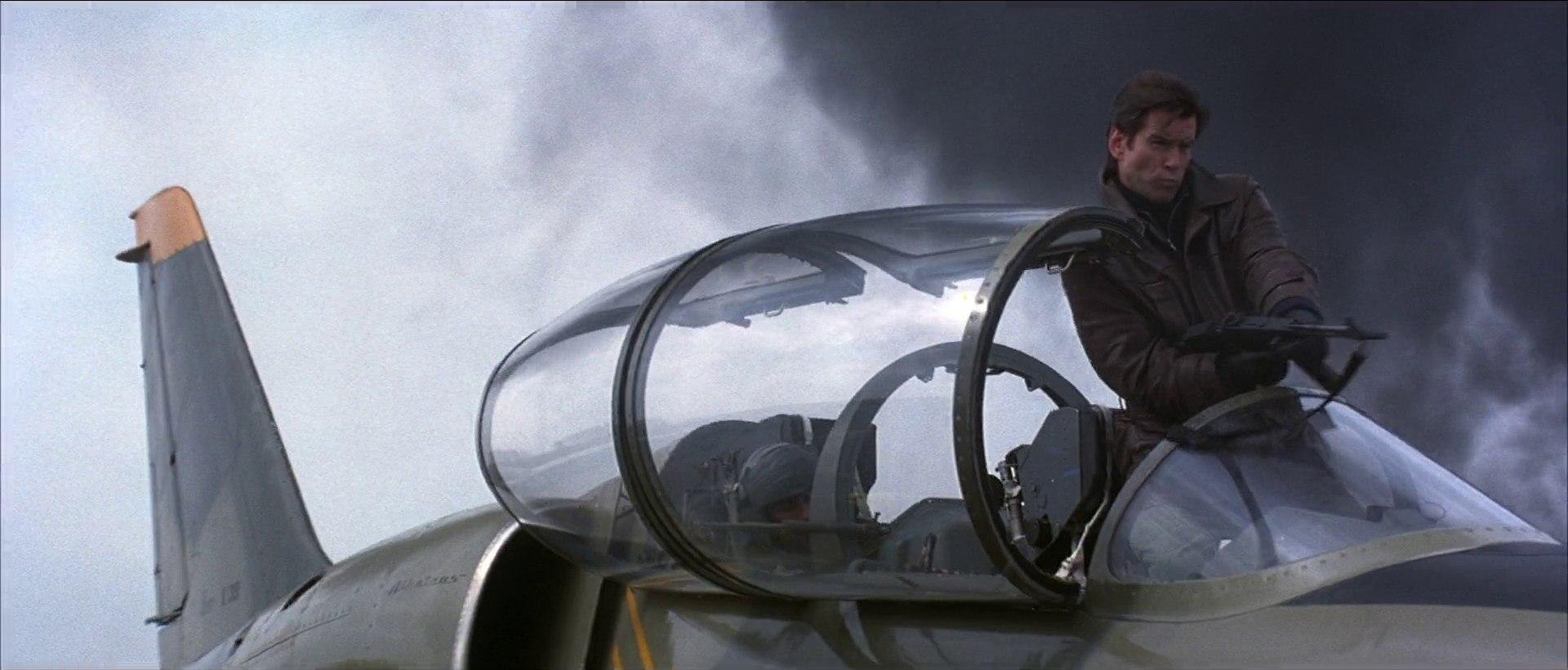
Many of my problems with Brosnan in GoldenEye (dullness compared to screen partners, lack of personality and confidence) are improved in this film. He’s noticeably better at delivering the quips, particularly “Backseat driver” when remote controlling his BMW and “They'll print anything these days” after disposing of a foe in a printing press. As a genuine fan of the more Dad joke veering quips, I really appreciate it. I also get the sense that Brosnan felt more comfortable in the role at this point.
Very decent action
One of my favourite scenes from this film is when Q is trying (and failing) to demonstrate to Bond how to remote control the BMW-product placement car with the Sony Ericsson product placement mobile phone. This then leads to one of the film’s more memorable scenes where Bond backseat drives the car out of a parking garage full of enemies, a sequence scored very funkily by David Arnold.
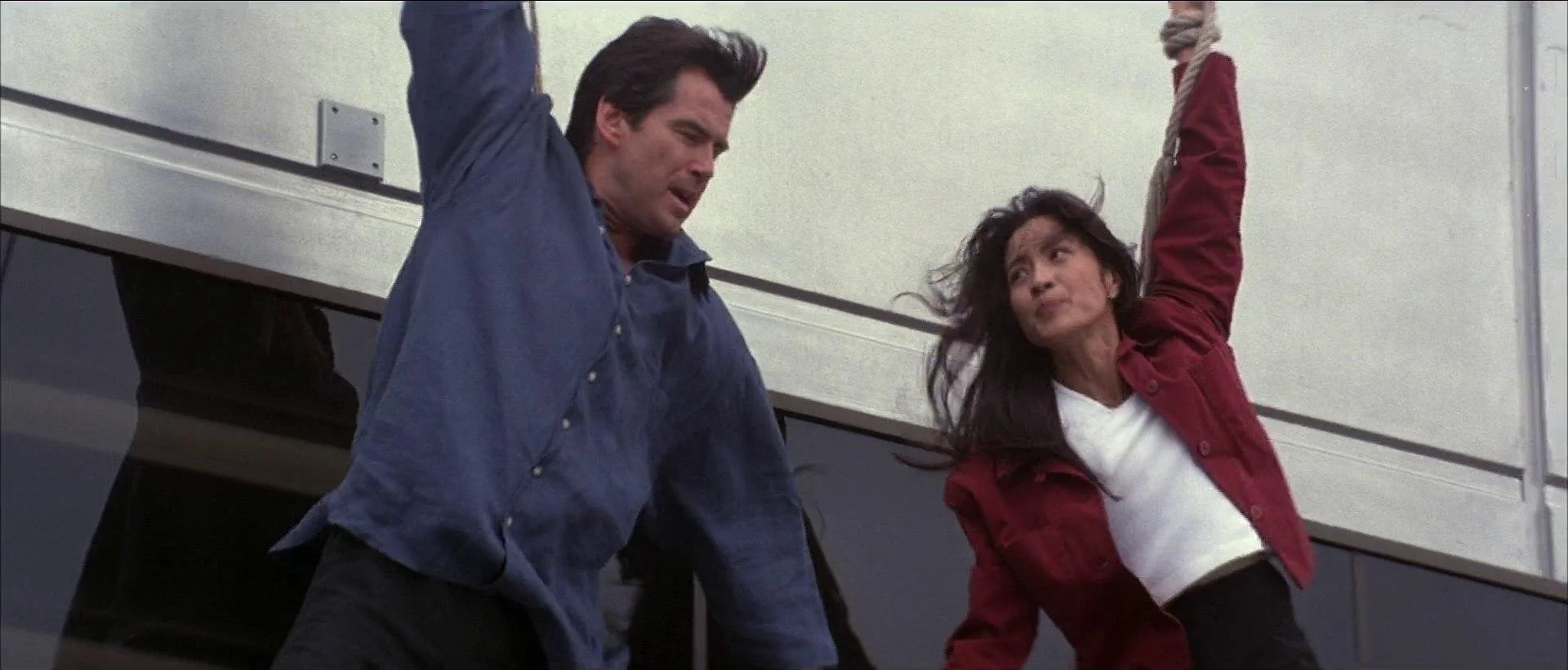
The other memorable vehicular action sequence is the handcuffed motorbike sequence through the streets of ‘Vietnam’ while being chased by a helicopter. It’s a very fun concept and both Brosnan and Michelle Yeoh perform it brilliantly.
Finally, there’s the HALO jump that Bond (stuntman B.J. Worth, of many of the previous Bond parachute stunts) performs in scuba gear. Very cool.
Michelle Yeoh
While she has less chemistry with Brosnan in romance scenes than in action scenes, Michelle Yeoh as Bond’s Chinese government rival Wai Lin is a refreshingly well constructed Bond girl. I’m generally a fan of the female rival agent subplot (used before in The Spy Who Loved Me and in Moonraker, if you count the CIA) but never before has it been as believable from a physicality standpoint. Yeoh’s experience in Hong Kong action films meant that she aced the fight choreography and while Spottiswoode didn’t let her perform the more dangerous stunts herself, I have no doubt that she could have.
David Arnold’s score
He does a great job of blending 90s techno with classic Bond strings and brass and for me, it really works. It feels like watching Charlie’s Angels and I mean that as a compliment.
The following, I mean as a criticism.
Murdoch would never be this overt
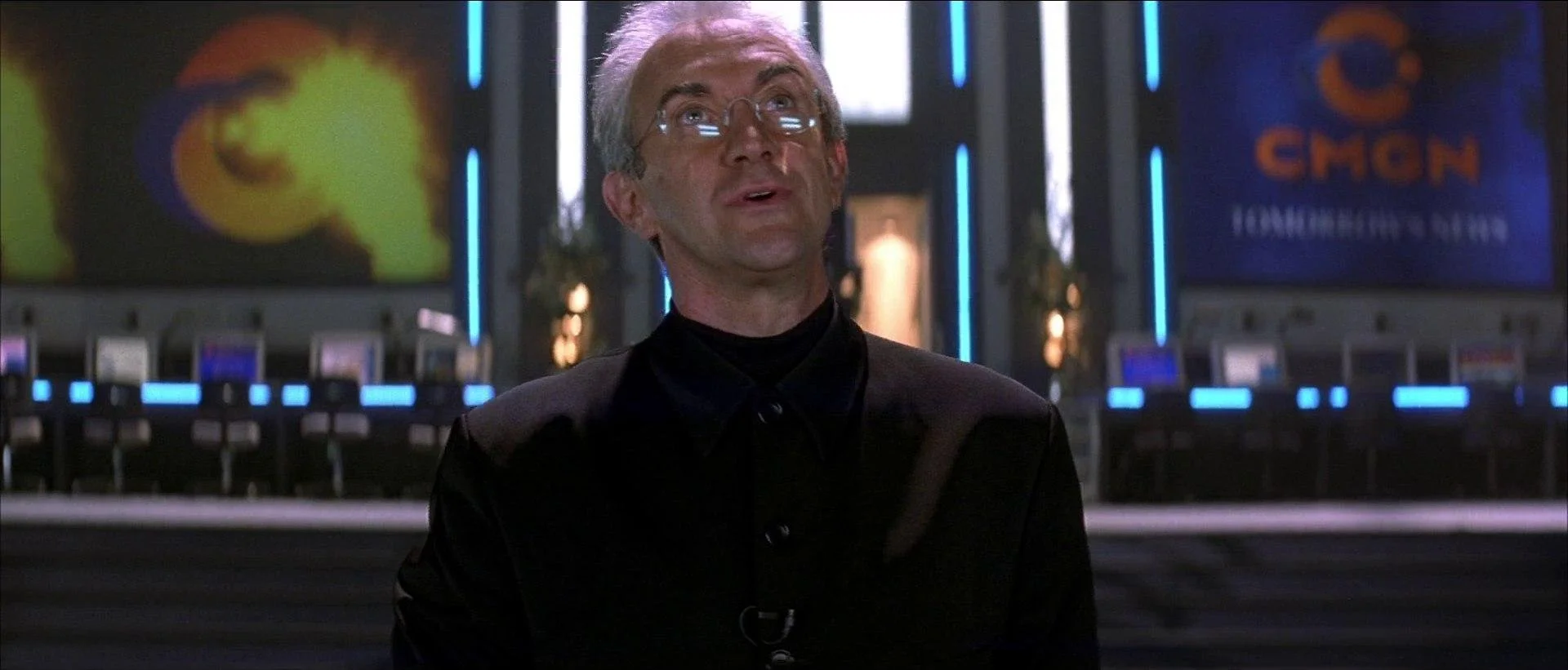
This is the first time that Jonathan Pryce played a fanatic with a God complex who gets everyone blown up and it wouldn’t be the last, which suggests a fun propensity for such characters. But as much as I love him as an actor, I don’t love Elliot Carver as a villain.
He fits the mould of a classic Bond villain, being a megalomaniac with grand designs and all. But for the specific realm in which Carver operates – big media, with Rupert Murdoch as a blueprint – his behaviour is a little hard to believe.
Surely manipulating the news and orchestrating your headlines ahead of time would draw less suspicion if you didn’t plaster your face all over your empire and insist on literally writing the headlines yourself? That can’t be an efficient use of CEO time. Elliot Carver is the Rita Skeeter of the Bond franchise and I just don’t believe that the masses would buy what he’s selling as truth.
I don’t like him saying “delicious” to dastardly plans. I don’t like his racist kung fu bit and I don’t like his cartoonish death. I do, however, like that he believes in chakra torture; the Venn diagram of conservatives and woo woo cookers is nicely observed. And I do find it believable that he would kill his wife because she slept with someone years before they met; it’s a very incel thing to do and Carver is giving big manosphere dork vibes.
Apparently the role of Elliot Carver was meant for Anthony Hopkins but he was doing The Mask of Zorro with GoldenEye director Martin Campbell. Given most of my issues with the character stem from the writing, I’m not confident that a Hopkins swap would’ve improved things.
The flop of a song
The annoying thing is that Sheryl Crow’s ‘Tomorrow Never Dies’ starts with such gravitas and drama (and cello!) that it sets expectations for a certain kind of Bond theme. Unfortunately, then she starts singing.
I don’t mean to be a bitch, especially since I have the vocal range of Leonard Cohen, but I know Sheryl Crow can sound nice. I like her songs well enough and her voice has never bothered me before, but this song goes to places that her voice just can’t follow.
When the credits rolled and k.d. Lang’s ‘Surrender’ played, I found myself wondering why they didn’t just go with that as the main theme.
While I got more out of Tomorrow Never Dies this viewing it pretty much ranks where it did after my first watch: somewhere in that awkward middle section of Bond films that aren’t offensively bad (apart from maybe the title credits, which I can’t decide if I find camp or cringe) but probably won’t make the headlines.
RANKING CATEGORIES (70%)
Bond execution = 7
Villain = 5
Bond girl(s) = 8
Song = 3
Opening titles = 5
Plot/action/gadgets = 5
Franchise identity = 5
PERSONAL ENJOYMENT (30%)
6/10