Digger
When Tom Cruise donned a fat suit as Les Grossman in 2008’s Tropic Thunder, he pretty much atoned for his PR sins of only three years prior, which included telling Peter Overton to put his manners back in, getting into a live stoush with Matt Lauer (though he might get a pass for this retrospectively) and most famously, almost breaking Oprah’s wrists and couch springs.
Les Grossman hinted, perhaps for the first time since Magnolia, that Tom Cruise had the ability to laugh at himself and interrogate his persona. So when the trailer for Digger came out and he appeared, once again, to be in prosthetics playing a fiery capitalist pig, I was immediately interested in seeing the film.
It comes from director Alejandro G. Iñárritu, who co-wrote the script alongside Sabina Berman, Alexander Dinelaris Jr. and Nicolás Giacobone and who conceived the story alongside Berman and Jez Butterworth. That’s five people who had their hands on the narrative of this film, which, now that I’ve seen it, explains a bit.
It’s difficult to talk about Digger before hitting spoiler territory but what I can say is that the premise hinted at in the trailer is slightly different from what’s actually in the film, though the message is largely the same. Digger is a satirical black comedy about greed, the tightrope between crying and laughing and the ways we distract ourselves as a means of self preservation.
Tom Cruise ostensibly plays Digger Rockwell, an oil tycoon whose company accidentally triggers a world-threatening climate event (insofar as drilling for years and years and years knowing there are methane pockets beneath the ice you’re drilling into is an accident) after a slab of Greenland breaks off and makes its way towards Europe. Digger must then work with POTUS (played by John Goodman) and other similarly elderly white men to figure out the optics on this thing and, if they have time, what to actually do about it.
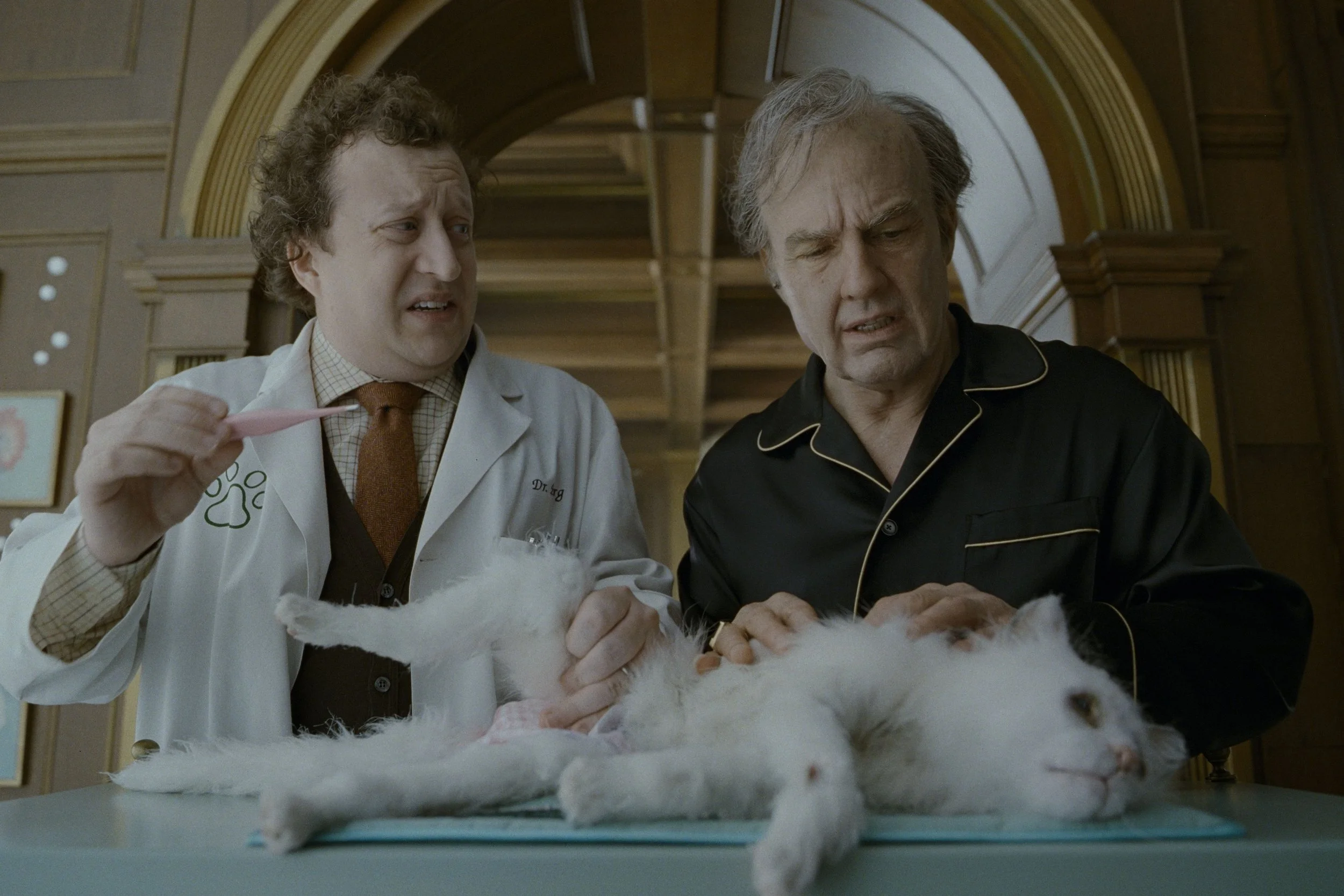
We know that Digger is rich and Southern, that he’s hesitant to listen to warnings from his employees and that he’s hopelessly attached to his 30-year-old cat Maggie, whom he has deprived of the release of death because he simply can’t let go. On this animatronic Bond villain cat’s final day of life she bites him so hard that his pinky finger needs stitches. He’s not sure if it was an act of love or hate. Iñárritu may wonder the same thing about audience sentiment towards this film.
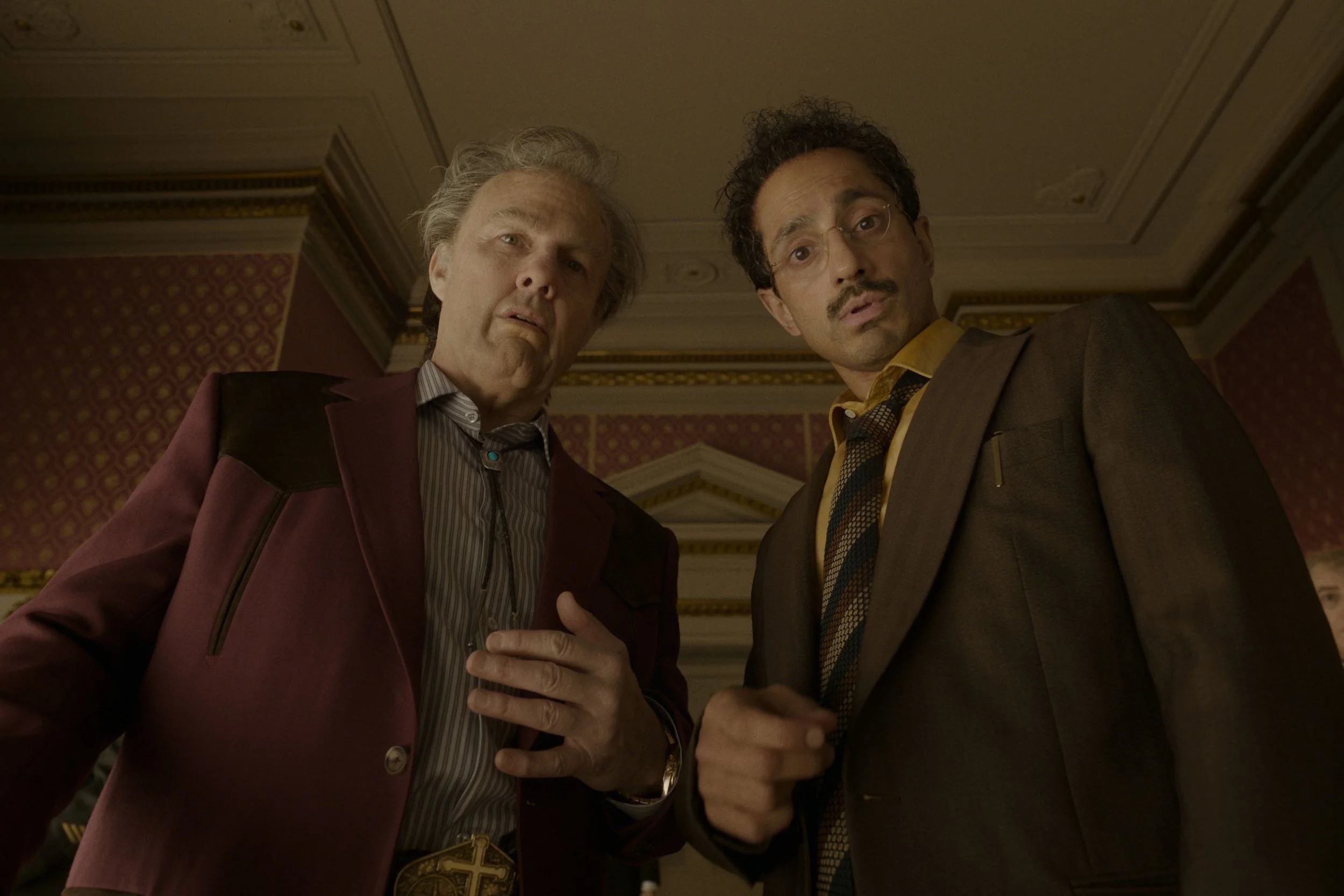
Based on gut instinct and the few reviews that have started pouring in, I expect Digger will be polarising at best. It is a matryoshka doll of a film with structural similarities to Iñárritu’s Birdman, Charlie Kaufman’s Synecdoche, New York and most obviously, John Cassavetes’ Opening Night, whose poster is featured blatantly in the background. What’s interesting is that, while those films use structure and metatextuality to deepen their central ideas, Digger does not. I do wonder if the film would’ve worked better without overcomplicating things.
I also wondered, while watching Tom Cruise in his fun prosthetics and searching his eyes for the humanity I’ve seen in other roles (most notably as Frank T.J. Mackey), whether metatextuality was on his mind during this performance. It’s grandiose and physical and I actually enjoyed it quite a bit, but my real fascination came from one particular scene where his character awaits news of his daughter, whose flight has gone missing in a weather event. I wondered if he was thinking about his own daughter and where she is and how she’s doing. Is he allowed to think these things? Does he seek out these roles so he can think them in secret?
No one would dare ask him such a question, given his responses to personal questions in the past and how skilled he’s been during the press junket for this film at steering the conversation back to the Scientology-approved topic of movie making. At this point I view Tom Cruise as a hostage of his own making. On the plus side, this tension works quite well in absurdist comedy.
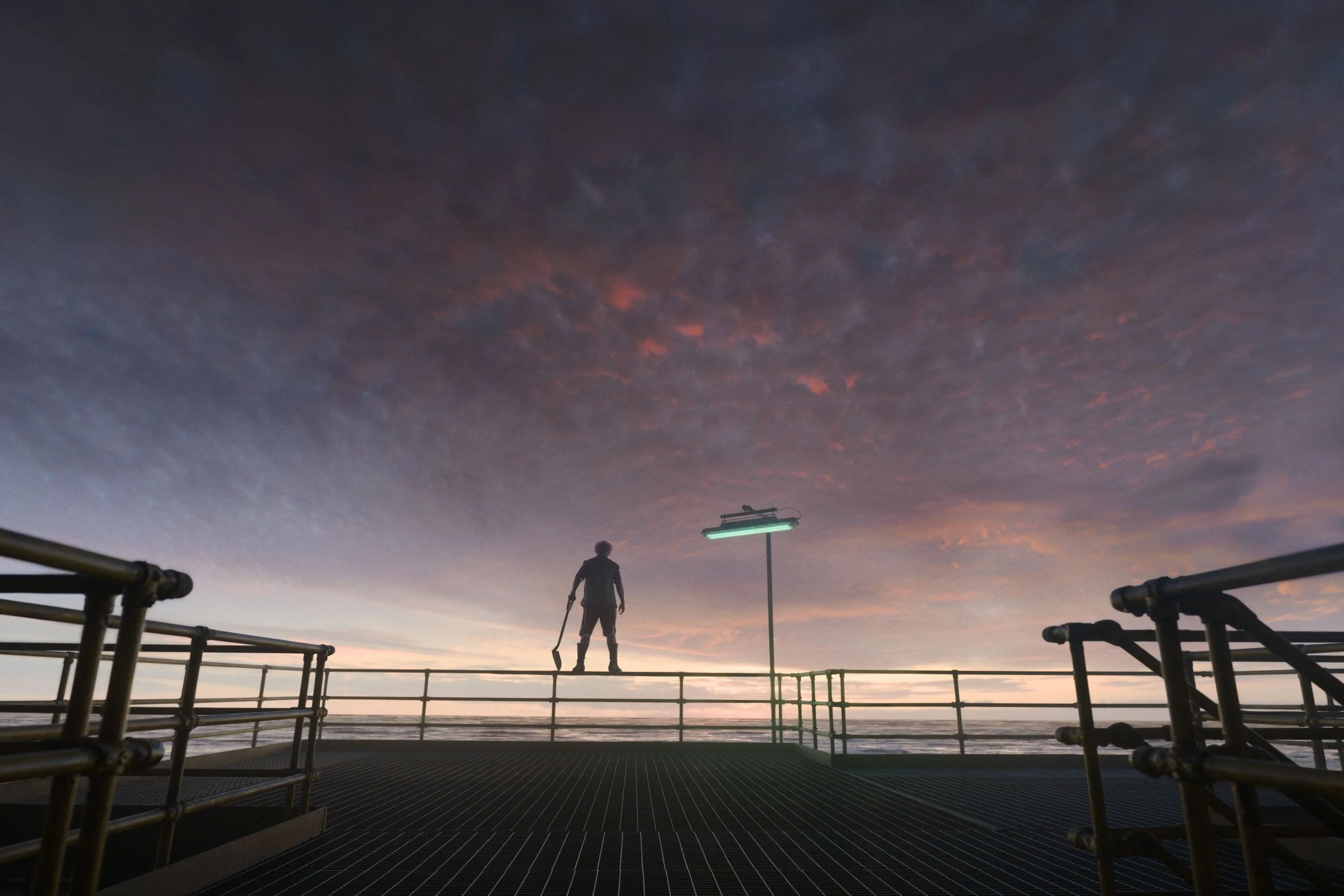
There are scenes in Digger that feel like if Wes Anderson were yelling. As such, Riz Ahmed is the standout of the film; it feels as though, more than anyone else, he “gets” what Iñárritu was going for. There are frames that echo the visual style of Roy Andersson, whose films I haven’t seen but whose desaturated depictions of melancholy are recognisable even to baby cinephiles like me. I enjoyed the sets immensely; Digger was filmed predominantly at Pinewood Studios by cinematographer Emmanuel Lubezki and I think it looks lush.
I also really enjoyed seeing some smaller stars – like Talk to Me’s Sophie Wilde and House of the Dragon’s Emma D’Arcy – alongside bigger ones like Michael Stuhlbarg and Jesse Plemons and Sandra Hüller. Burn Gorman’s mostly wordless performance is also a highlight.
If you get exhausted easily by obvious, shouty satires (like Don’t Look Up) then Digger may prove a bit annoying. It lacks the cultural sharpness of Armando Iannucci and the discomfort of Ruben Östlund. And it’s closer in comedy to Austin Powers than it is to something like Idiocracy, a film which feels positively profound by comparison. But I did laugh at its ridiculousness and I mostly enjoyed the ride, even if it went for way too long.
Whether Digger will lead Cruise any closer to self-reflection than his Mr. Movie persona of the post-Mission Impossible/Top Gun: Maverick era remains to be seen. I love him despite his personal flaws and I think this was a refreshingly interesting role to take – even (or especially) if the film doesn’t go down well with audiences.