If you want to make me cry, there’s a simple hack that works 100% of the time. I first became conscious of it while watching the opening sequence of Up, witnessed its recurrence in the opening credits of Planet Earth II and acknowledged its efficacy in the final scene of Portrait of a Lady On Fire. I am of course talking about the emotive use of instrumental or orchestral music in storytelling and its uncanny power to make me feel the overwhelming beauty and immense sadness of life on Earth.
A new film employs this trick most effectively in its final scene: Paweł Pawlikowski’s Fatherland, the third in his thematic trilogy of post-war films that also includes Ida, which I’ve still not seen, and Cold War, which I remember loving. But to get to the glorious end, we have to start at the beginning – Germany in 1949, a time of great weirdness and confusion that I’ve never really thought about before but that this film paints in lush black and white.
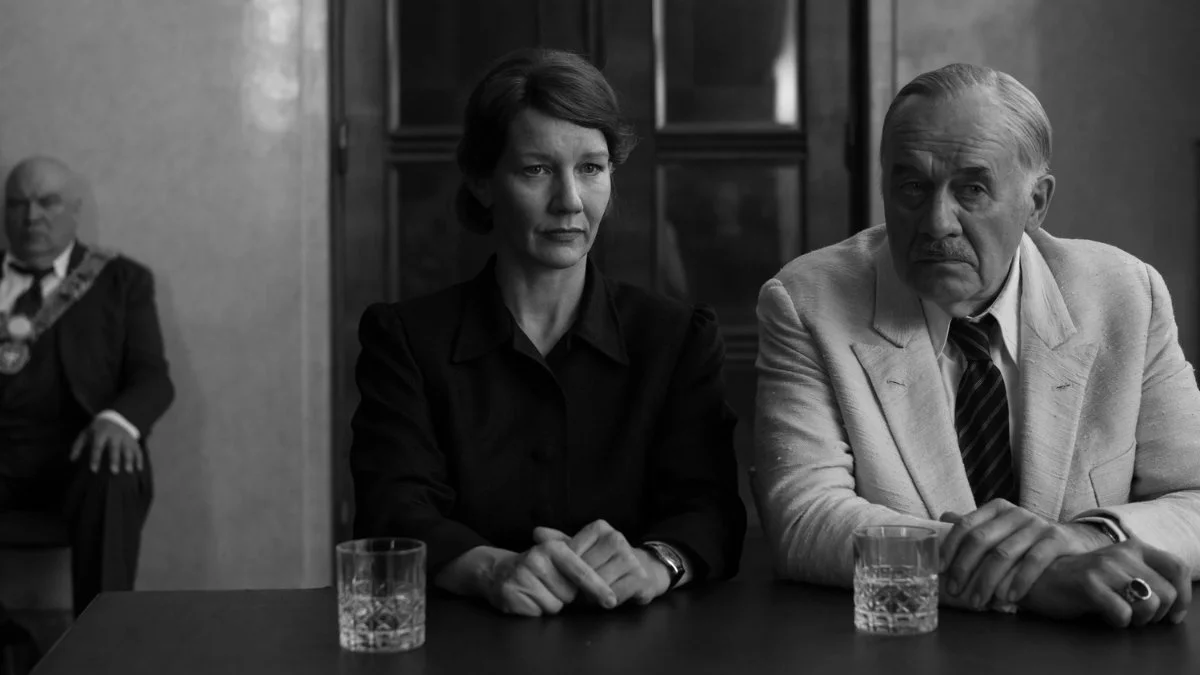
Thomas Mann (Hanns Zischler) is a man of words and ideas outside of the now. He left Germany in the 1930s and lived in exile in the US, missing the entirety of World War II and the rise and fall of Nazism, and only returning afterwards to accept the Goethe Prize in Frankfurt. This has rubbed many Germans the wrong way and some of them are sending him angry letters about it, calling him a traitor to the “fatherland”.
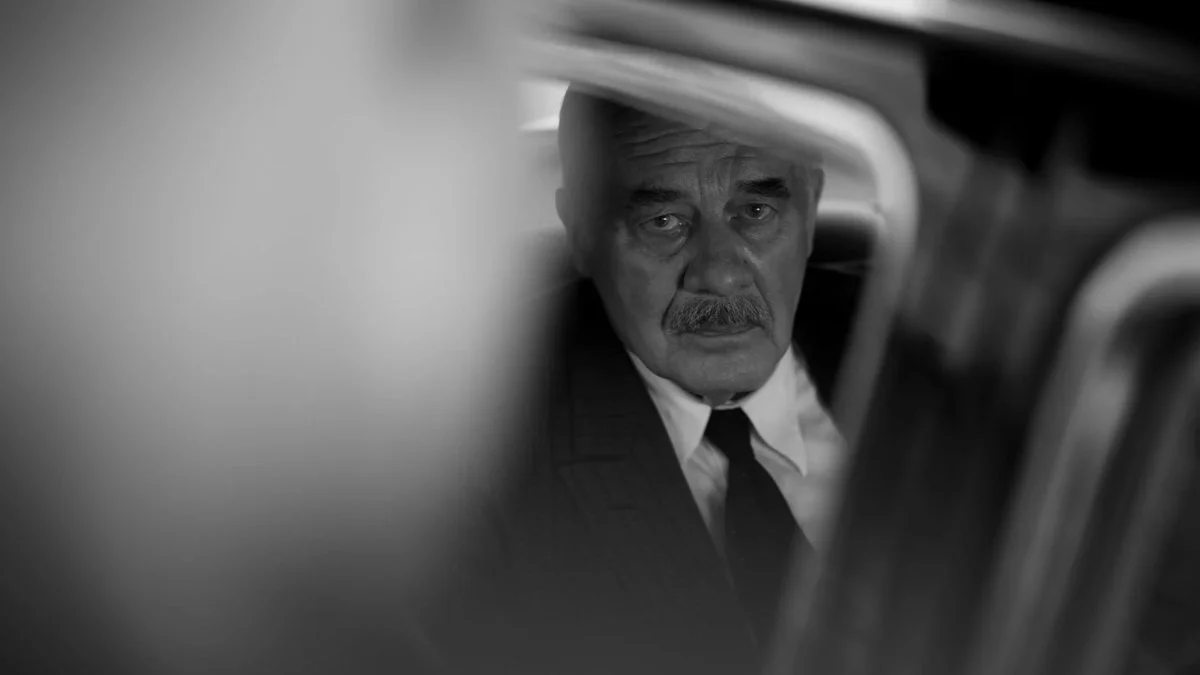
Fielding these letters is his daughter Erika (Sandra Hüller), who is also his chauffeur, Head of Comms, Executive Assistant and translator. She’s accompanying him on this tour as Thomas speaks on Goethe in West Germany before controversially heading over to Weimar to receive a second prize. Erika’s American journo friends inform her that if they go ahead with the second leg of the tour to the East, Thomas will likely be persecuted upon returning to the States.
It’s clear that the Germany they left no longer exists and they’re being asked quite explicitly to pick a side: American capitalism or Soviet communism. Erika is faster at grasping this new reality but Thomas, a renaissance man who believes that art knows no borders and that his work predates Germany’s separation, seems intent on remaining above it all.
This is true personally, as well. He struggles to see eye to eye with his son Klaus (August Diehl), an outspoken anti-fascist writer who very much took a side in writing Mephisto, a Faustian novel that was banned in West Germany. Erika and Klaus are very close and it’s clear that she holds the burden of being the mediator between father and son. When tragedy strikes the family, Thomas seems unable to process or even address his grief, a development that mirrors his fraught relationship with the place where he was born.
Fatherland explores a fascinating moment in history and the feeling of placelessness when a country is changed irrevocably. The evil of Nazism didn’t just dissipate; it was absorbed by both factions and manifests in similar ways within each. In one scene when Thomas and Erika are in Weimar, a man makes it into their hotel to warn them about the new state of things before being grabbed and escorted off, presumably to be beaten or worse. But it’s also present in the paranoia developing in the US under McCarthyism.
Thomas believes that neither system ultimately works and at this point in time (1949), that’s offensive to both sides. It’s interesting how things swing around because this viewpoint is barely a hot take in 2026.
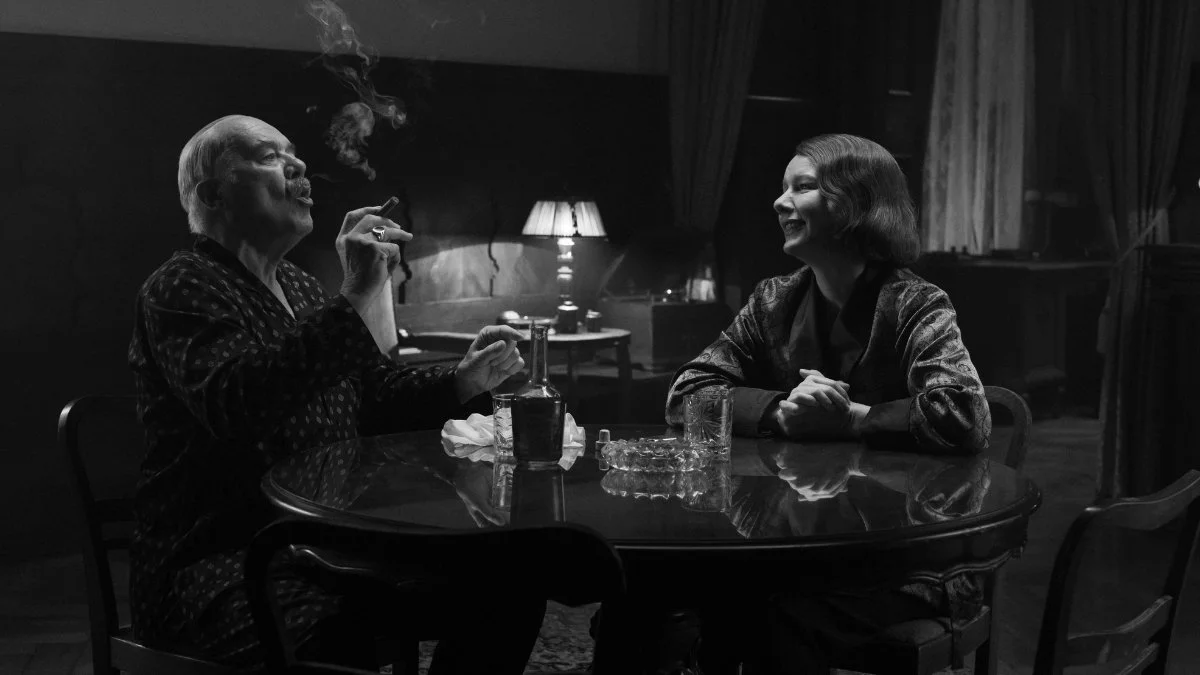
While Fatherland obviously deals with a serious matter it also has lighter moments, like when Thomas enacts a verbal takedown of the twin grandsons of Wagner (Hitler’s favourite composer) after they proposition him to help restore a festival that the Nazis adopted and bastardised. And when Erika slaps her ex-husband – an insufferable Nazi schmoozer – in the face, much to the amusement of the other hotel patrons.
This is a film that asks you to consider where you’d call home if the home you knew no longer exists; which side you’d pick if neither represent your ideals; how to reconcile with family members whose ideologies differ so much from your own; and whether what you’re espousing even has a place in the current world.
It feels redundant at this point to heap praise onto an actor as accomplished as Sandra Hüller but I’m going to do it anyway; she is the beating heart of the film and you can feel her inner conflict and hurt in every scene despite carrying on as a dutiful daughter. Equally, Hanns Zischler as Thomas, so resolute not to face the reality of history both national and personal, only to let it all hit him in the film’s final moments, absolutely wrecked me.
This is a film that is meditative in its pace but packs a lot of resonance in its relatively short runtime (it’s only 82 minutes). It’s also fairly accessible; I don’t think you necessarily need to be a history buff to grasp its general message. Rather, just pay attention to the two radio stations Thomas tries listening to in Erika’s Buick before turning it off entirely and entering a bombed out church to instead listen to a hauntingly beautiful organ rendition of Bach’s ‘Jesu, Joy of Man’s Desiring.’ Cue tears.